Christians are called to be great. Although, maybe you don’t think you’re one of the great ones. Maybe you do. Either way, this message is for you.
One of the most damaging, disastrous failings of the church in our age is that you and I, “ordinary Christians,” have not responded to God’s call to be great.
Called To Be Great Means Humble, Not Puny
God calls us to be humble, not to be puny. When Jesus rebuked the disciples for jockeying for position in his kingdom, he invited them at the same time to greatness, as long as it was greatness on the right terms: “Whoever desires to become great among you, let him be your servant. And whoever desires to be first among you, let him be your slave” (Matthew 20:26b, 27).
What God Chooses
God chooses public greatness (church-wide, community-wide, or even broader in scope) for certain people and not for others. But I fear there are many that God has called who don’t listen, trust and obey. Some could be great for God, legitimately called by him, but turned their back on it.
This is a great loss to the kingdom of God. A burying of talents that God rebukes. To be great in following what God calls us to requires humility and obedience.
Called To Be Great Means Ready To Pay The Price
We can learn about greatness from John the Baptist from the account in Luke. It uncovers the second chief reason many fearfully approach the topic of greatness. I think it often explains the shrinking from the greatness God call us to:
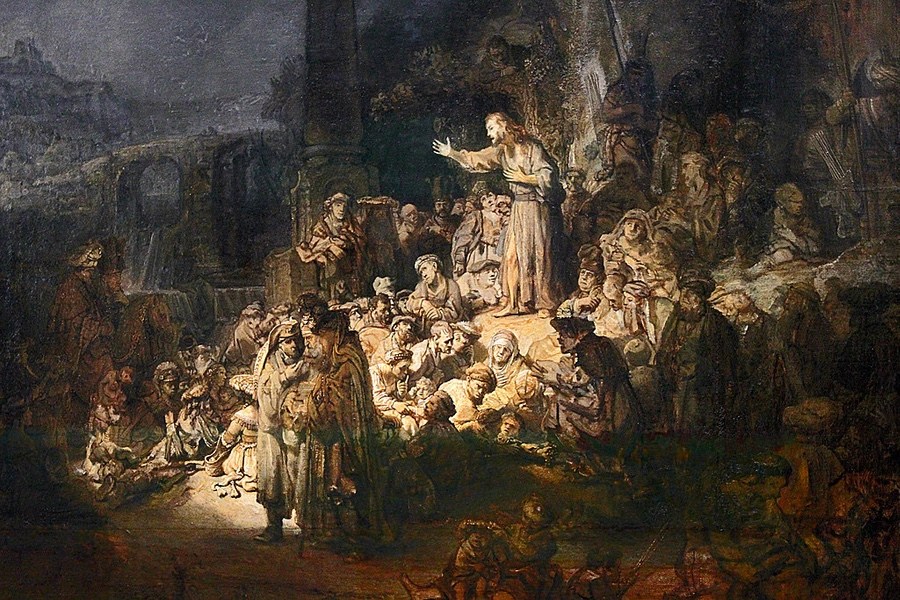
Then he said to the multitudes that came out to be baptized by him, “Brood of vipers! Who warned you to flee from the wrath to come? Therefore bear fruits worthy of repentance, and do not begin to say to yourselves, “We have Abraham as our father.” For I tell you that God is able to raise up children of Abraham from these stones. And even now the ax is laid to the root of the trees. Therefore every tree which does not bear good fruit is cut down and thrown into the fire.” So the people asked him, saying, “What shall we do then?”
He answered
“He who has two tunics, let him give to him who has none; and he who has food, let him do likewise.” Then tax collectors also came to be baptized, and said to him, “Teacher, what shall we do?” And he said to them, “Collect no more than what is appointed for you.” Likewise the soldiers asked him, saying, “And what shall we do?” So he said to them, “Do not intimidate anyone or accuse falsely, and be content with your wages.” And with many other exhortations he preached to the people. But Herod the tetrarch, being rebuked by John concerning Herodias, his brother Philip’s wife and for all the evils which Herod had done, also added this, above all, that he shut John up in prison (Luke 3: 7-14, 18-20 NKJV).
John stirred things up a great deal. He paid a price for it in the end. (Jesus himself did the same, even more so.) But John knew what he was called to do, which included agitating for change in a corrupt culture. Some responded gladly. The king, however, threw him in prison, and later had him executed.
Greatness pays a price. Even “successful” greatness–such as the greatness of Daniel, of Joseph, of many others in our day who see great fruit. Like in churches, mission agencies, government, and military. There’s a price of long hours, much opposition, deep concerns, many pains.
Called To Be Great Means Trusting in God
I think I have too often refused to step toward greatness because of fear: fear of stirring people up, fear of being branded, fear of having to give up the easy way.
I lost the thrilling opportunity to see what God could do through me if I followed him wherever he led. And also, the glory of God, which I could have shared in the wider world, was hidden like a light under a bushel.
Following John’s great example
The desert example of John the Baptist is a hard one to follow. God does not call many to make a solitary stand for him in that way. But He does call us individually to follow him wherever he leads; that is a decision we each make for ourselves.
From there, though, most of us will find opportunities to follow God into greatness by doing it with teams of brothers and sisters in Christ. Oh, for communities of faith that are determined to change their cities, their world! To join a band of believers who charge the enemy’s ground and take it back for Jesus Christ!
About:
Tom Gilson is senior editor and columnist with The Stream. He’s published over 700 articles and several books including his most recent, Too Good to Be False.
Join My E-mail List
And I’ll send you my article: Exaggerate to Make Your Presentations Funny. You’ll learn how to punch up your presentations with humor.
Christians are called to be great. Although, maybe you don’t think you’re one of the great ones. Maybe you do. Either way, this message is for you.
One of the most damaging, disastrous failings of the church in our age is that you and I, “ordinary Christians,” have not responded to God’s call to be great.
John the Baptist: Great in Humility, Humble in Greatness
Consider the amazing humility, yet boldness, of John the Baptist, as seen in John 1. Here is humility personified. “I baptize with water,” he says, “but there stands One among you whom you do not know. It is He who, coming after me, is preferred before me, whose sandal strap I am not worthy to loose” (John 1:26b, 27).
This is the man who clothed himself in goatskins, who ate locusts and wild honey, who eagerly turned over all his followers to Christ when he arrived on the scene, one who gladly said, “He must increase, but I must decrease” (John 3:30).
How then could he say what he said about himself? You may not have noticed it; it’s easy to miss from our distance. Here’s the scene: The Jewish leaders had sent messengers to ask him who he was and how he claimed the authority to baptize, that is, to establish a prominent new religious movement outside of their authority.
They asked Him if he was the Christ, or Elijah, or the Prophet (the one predicted very early by Moses) and he denied them all. So they said, “then who are you?”
How John answered when called to be great
His answer: “I am ‘The voice of one crying in the wilderness: make straight the way of the Lord,’ as the prophet Isaiah said” (John 1:23). Let me paraphrase that to give you a clearer sense of what his listeners heard when he said that. John’s answer to their question was, “I am one of the three or four most important people in the history of this nation!”
This messenger was one of the most anxiously awaited people in all of prophecy, second only to the Messiah he would herald. When John claimed that identity, he took the title of one for whom Israel had been waiting for 700 years! John claimed greatness in high degree.
Called To Be Great And Sent From God
This is humility. It’s humility of a kind we seldom see, though. The explanation is in a simple statement in verse 6: “There was a man sent from God, whose name was John.” John was sent by God; he was simply doing what he was told to do, and he was doing it for the glory of God, whom he constantly lifted up in the person of Jesus Christ. John was both humble and great at the same time.
There are many such examples in the Bible. Isaiah’s response when he saw the Lord was, “Woe is me, for I am undone! Because I am a man of unclean lips, and I dwell among a people of unclean lips; for my eyes have seen the King, the Lord of Hosts” (Is. 6:5). Yet when God asked, “Whom shall I send, and who will go for Us?” he said, “Here am I! Send me” (v. 8). He humbly confessed his unworthiness, he accepted his call, and he went on to a career that changed kings and kingdoms.
Called To Be Great
God chooses who may have greatness of impact or leadership. Our part is to recognize what God has called us to, to trust in him to accomplish it through us, and to direct all glory to Jesus Christ. Indeed, this is the greatness of spirit that all of us are called to seek. In some people, however, it will produce more widely visible fruit than others. This is the choice of God.
God gives some of us more opportunity than others. In Matthew 25:14-30, one man received five talents, one received two, and another only one. The ones who received five and two brought a return to their master of five and two respectively.
Even though the second one brought back less than half than the first, he received the same commendation: “Well done, good and faithful servant; you were faithful over a few things, I will make you ruler over many things. Enter into the joy of your lord.” The exact same words are used in both Matthew 25:21 and 25:23.
Called to great is both leading and following
Those who are not asked to enter leadership of widespread impact are no less of value to God than those who are, and they are expected to be faithful with what they are given. The one who received just one talent brought nothing back with it; he was the one who was censured. His lack of understanding of his master, his lack of faith, and his fear caused him to end with disapproval.
God chooses leaders according to his own will. We see this throughout the Bible, beginning with Abraham, continuing through many others like Moses, David, Esther, Mary, the twelve, and Paul.
What these men and women shared in common was the calling of God and their response of humility, faith, and obedience; and also that their lives made a great deal of difference in the world.
About:
Tom Gilson is senior editor and columnist with The Stream. He’s published over 700 articles and several books including his most recent, Too Good to Be False.
Join My E-mail List
And I’ll send you my article: Exaggerate to Make Your Presentations Funny. You’ll learn how to punch up your presentations with humor.
Three questions to measure your spiritual trust factor. In the midst of our country’s current unrest, an important fabric has been torn. Have you noticed?
It’s trust.
It’s trust that lets me drive on the right side of the road and expect oncoming drivers to do the same. And we smile and wave passing safely on our side of the road. At least I smile and wave. You might be texting.
Trust promotes order in a free, civilized society. And to remain, well, civilized. Otherwise, social order is at risk.
But perhaps, what’s really troubling us is a spiritual trust issue. One that penetrates deep within the human heart. And concerns spiritual questions of purpose, meaning and existence.
So, here are three questions to measure your spiritual trust factor.
Three questions to measure your spiritual trust factor. In What Are You Placing Your Spiritual Trust?
Beyond trusting me to stay on my side of the road. And perhaps refrain from texting while driving, what are you trusting? Money? A job? A political party? A skill-set? The government? A religion or philosophy?
As a Christ-follower, I trust an almighty God who has my best interest in mind. Because He is the only one who is completely, spiritually trustworthy.
Sure, there are things in this world that provide a level of security. But never completely. Since there are no guarantees. There is always some doubt. Did I do enough? Have enough? Check all the boxes?
Furthermore, scripture says God has a sovereign plan. And He’s moving us towards it. You might even sense the pace is quickening. The signs of something looming more visible. Maybe you’re even feeling a bit nervous and uncertain.
Scripture says no amount of good works will qualify me FOR God’s love and no amount of bad behavior will disqualify me FROM God’s love. That’s comforting because I’m pretty sure my bad outweighs the good. How about you? The good news is that God’s grace covers all who respond and accept it.
That’s a spiritual trust that leads to spiritual peace.
Three questions to measure your spiritual trust factor. How Proven Is The Source Of Your Spiritual Trust?
The Bible is absolute truth for Christ-followers. And you can’t get any more spiritually trustworthy than absolute.
It’s been scrutinized, analyzed and dissected more than any other document in the world. It’s historical accuracy is supported by archeology. It bats a thousand on hundreds of fulfilled prophecies. And withstood all claims of error for over 2,000 years.
From a human perspective, no other document is anywhere close in credibility, accuracy and reliability. Not one offers a higher level of spiritual trust.
How Reliable Is The Object Of Your Spiritual Trust?
My grandparents owned a farm with a pond. And we skated on it in the winter when cold temperatures froze it over. But you couldn’t tell how thick the ice was by looking at it. You had to test it.
And the level of trust you demonstrated didn’t matter.
You could march out confidently and fall through thin ice. Or inch out cautiously on thick ice that easily supported your weight. But what mattered was the trustworthiness of the ice. The object of your trust.
For Christ followers, that object is Jesus Christ. He claims to be the way, the truth and the life. The key to eternal life. The Son of God. But you can’t just believe in him. You have to spiritually trust him.
And when you do, it’s a game changer. One with an eternal impact.
Chip Tudor is an author, blogger and professional writer. He publishes books, humorous Christian drama, and thought provoking blogs from a Christian worldview.This blog is originally published here.
The Biblical story of Noah’s Ark in Genesis is more than a children’s Bible lesson.
It’s also mentioned in eight other books of the Bible, which includes Jesus describing it as a real event.
Here are four lessons the story of Noah’s Ark has for all of us.
THE BIBLICAL STORY OF NOAH’S ARK REVEALS THE CHARACTER OF GOD
It’s affirmed throughout the Bible. God is love.
But if you stop there…focus only on God’s love…the story of Noah’s Ark is puzzling. Because the next obvious question is…
How can a loving God
simply wipe people off the face of the earth? How can a loving God send people
to hell?
To make sense of it you have to understand that God is also…
HOLY, RIGHTEOUS & JUST
Since God grants us free will, we get to make our own decisions. And bad decisions lead to bad behavior. Even to a level of evil. Scripture calls this sin and says we’re all perpetrators at some level.
God lets us carry on with sinful behavior for a season—which we’re in right now—but not forever.
Because God is holy and just, He eventually deals with sin and judges with perfect fairness. But because of His love, He wants to spare us. Therefore He…
Makes a provision
Noah’s ark was God’s provisional flood escape plan. While building it, Noah warned everyone about the coming disaster so they had the same opportunity for escape. But they refused to listen and respond.
And Jesus Christ represents God’s eternal provision today—for those who listen and respond.
THE BIBLICAL STORY OF NOAH’S ARK PUSHES AGAINST SOCIAL CONVENTIONS
God tells Noah to build an ark and provides instructions.
And Noah builds it all the while proclaiming the coming flood. The first religious nutcase! Especially considering the word “flood” wasn’t even in the ancient parchment dictionary.
You can imagine the laughter. The ridicule. The late night monologue jokes.
Had it been today, Noah wouldn’t make it past the city
building permit.
But Noah persevered. Ignoring popular opinion. Pushing
against the culture. Perhaps feeling alone and isolated.
And thousands of years later, Jesus did likewise. Hanging out with social outcasts and infuriating the religious elite by healing people on the Sabbath. Not breaking the command itself, but the extra rules the religious leaders unfairly piled on top of it.
The point is, when you strive to honor God and pursue a relationship with Jesus Christ, you’ll stand out in the crowd. Push against the culture. And the drivers of the popular culture may snub you in return. Ridicule you. Maybe worse.
And rather than assuring complete protection, Jesus simply says to deny yourself and follow him. No wonder the number of Jesus followers keeps dwindling.
THE BIBLICAL STORY OF NOAH’S ARK TELLS US GOD PRESENTS GOD SIZE PROJECTS
Did God really have to make Noah take all the animals with
him? What about herding them up the side of a mountain and stopping the water
below them rather than cover the entire earth?
Then Noah could build a much smaller boat. One just big enough for his family, pack a little food and call it a two-week vacation cruise.
Instead God tells Noah to build a massive ark that takes 120 years to complete. Then he’s cramped up with a load of smelly animals he has to care for and surrounded by water for a year…without a hot shower.
Who says God doesn’t have a sense of humor?
The point being, God gives Noah a job so big he has to rely on God to accomplish it.
Why?
Because had Noah succeeded on his own he would have taken the credit for it. The same is true for us. God gives us arks to complete that require His help so we give Him the appropriate recognition and glory.
THE BIBLICAL STORY OF NOAH’S ARK TELLS US WHEN GOD GIVES A BIG ASSIGNMENT HE PROVIDES THE RESOURCES AND WE PROVIDE FAITHFULNESS
God could have delivered the ark to Noah assembled and ready to go. But He didn’t. Or make it more bite size, more manageable for Noah to accomplish. Not that either.
In fact, God didn’t need Noah at all. He could have created someone new and improved with the snap of His fingers.
What Noah DID provide was faithfulness in pursuing a life God approved of and in following God’s command.
And it teaches us something else about God.
Not only does God love and provide for us, He invites us into
His work. We don’t have to. We’re not doing Him a favor by participating. But
when we do, we’re the ones that are blessed. Go figure, right?
You see faith is never merely passive belief. As James says, it’s lived out through our actions.
So what’s your ark? What massive spiritual assignment is God handing you? Think it’s too big for God and you to complete? Or is perhaps, your faithfulness to and view of God too small?
About Chip Tudor:
Chip Tudor is an author, blogger and professional writer. He publishes books, humorous Christian drama, and thought provoking blogs from a Christian worldview.This blog is originally published here.
Looking for a Bible Study for yourself or small group??
Looking for a quick, humorous book to read? I think you’ll find that my Christian detective novel, Soul Pursuitis fast-paced, entertaining and inspirational. Here’s a funny scene from one of the chapters to grab your interest. Check out the five-star reviews on amazon then buy a copy of Soul Pursuit and enjoy reading it yourself.
An Excerpt From Chapter 22 in the Detective Novel Soul Pursuit
Warren looked at Terrence and Jeff with an admonishing frown.
“If you two are finished with your teasing and home spun philosophizing, can we get back to our discussion on the deity of Christ? How can Jesus be fully God and fully man at the same time?”
“Don’t think we’re supposed to understand
it,” said Terrance. “It’s what you call a…uh…a…”
“Paradox,” finished Jeff.
“Yeah. I mean, Jesus was a real person. He
experienced everything we do. What do you think, Jack?” asked Terrence.
I knew he was trying to pull me in, to engage me in a spiritual discussion. But I wasn’t going there. I gave a non-committal shrug.
“But you have an opinion. A worldview. We all do.”
“This is a safe place to explore scripture and ask questions,” said Warren. “We’re all on a spiritual journey and none of us have it all figured out.”
“Okay, since you’re talking about real
people, I do have one question weighing on my mind,” I said.
Warren smiled encouragingly, the paternal,
spiritual father encouraging a toddler to take his first spiritual, baby step.
“Ask away.”
“Did Jesus fart?”
Warren’s smile crumpled into a look of
shock at such sacrilege. Terrance was in mid-drink of coffee and blew it
through his nose as he laughed. Jeff smiled, uncertain where the conversation
was headed, but ready to go with the flow.
“What?”
It caught Warren completely off guard and
the spiritual confidence that had marked his face dissolved into one of holy terror.
It was nice watching someone else squirm for a change so I pressed forward.
“Did Jesus fart?
You know, pass gas, cut the cheese, play the posterior trumpet.”
Warren’s face grew a deep red.
“I…I…don’t see the relevance in that
question.”
“Terrence just said Jesus was fully God
and man. And he shared all our experiences. If so, shouldn’t he break wind like
everyone else? And by the way, if Jesus was perfect, what would a perfect fart
sound like? Or smell like? Don’t give me a churchy, idealized version of God. You
say he’s real. I want to know how real.”
“Jesus was real in every sense of the
word. But this level of vulgarity is not germane to our spiritual discussion.”
Warren was visibly struggling and
reverting to obfuscation to cover his discomfort.
I smiled innocently and shrugged.
“Why not?”
“Wait a minute,” said Terrance.
He was trying to control his laughter and
wiping snot globs of coffee from the table.
“I think Jack has a legitimate point. I
mean, we do talk about the humanity of Jesus, don’t we?”
Warren’s look of discomfort turned to
horror. His friend was turning against him.
“Yes, but—“
“Well, if he’s the God who created smell
in the first place, I’d think he could go either way,” said Jeff.
“Meaning?” asked Terrence.
“Raunchy or sweet.”
“A loud blast or silent but deadly?” I
added.
Crass conversation was in my wheelhouse. Maybe I could get into this accountability thing after all. Terrance had another thought and almost spit out a mouthful of donuts in his haste to share it.
I was warming up to the exchange.
“Hey, maybe that’s part of the story we
missed in the Bible. You know, when Jesus cleared the temple?”
“A holy of holy farts,” said Jeff. “Awesome
in power and mighty to scatter away.”
Jeff and Terrence were both now laughing
so hard they were slapping the table and wiping tears from their eyes. I joined
them along with people in nearby booths who had no idea what was funny, but laughed
because the laughter was infectious.
Warren, however was appalled at such blasphemous
talk.
“This conversation shows an incredible lack of reverence for God. It’s…it’s undignified.”
“Maybe,” said Terrance. “But if Jesus could
control the smell, what does that say about election and free will?”
“And the trinity?” added Jeff. “An
Omnipotent fart to the power of three might evaporate the universe.”
Warren was self-righteously indignant. He closed
his Bible and gathered his notes.
“This Bible Study has downgraded to obnoxious
and is effectively concluded.”
“Okay,” said Terrance. “Then I have a parting
thought.”
We waited expectantly as he stood and
smiled.
“Oh, man. SBD bomb!”
With no further discussion we all left.
Click here to purchase a copy of Soul Pursuit or check out other books by Chip Tudor.
Join my list and I'll notify you of new blog posts and send you a monthly newsletter. It features inspirational thoughts, writing tips, and a peek into writing projects. I'll also include my article: Exaggerate to Make Your Presentations Funny. It shows you how to punch up presentations with humor and make them more compelling.