Philippians 1:26-30 encourages worthy discipleship, calls for unity, courage against the culture, and warns about the cost of discipleship.
Philippians 1:26-30 calls Christ-followers to be worthy of the Gospel
V.27 Only let your manner of life be worthy of the gospel of Christ…
We sometimes act like we’re doing Jesus a favor by following him. But Paul suggests the opposite. Jesus did us the favor. And our lives should demonstrate appreciation.
The Greek word for worthy is axiōs, which means appropriately and after a godly sort.
In other words, does your Christian walk reflect a Godly lifestyle that is appropriate for a Christ-follower? Is your Christian conduct worthy of the sacrifice Jesus made for you?
REFLECT AND RECORD
What does it mean to live a Godly lifestyle? How should that lifestyle present itself at home, work, church and in social settings? How would you rate your walk as worthy of the gospel of Christ?
Philippians 1:26-30 calls for unity among Christ-followers
V. 27 that you are standing firm in one spirit, with one mind striving side by side for the faith of the gospel, and not frightened in anything by your opponents.
Let’s break it down.
Standing firm…
The winds of social change are blowing. But God’s word remains the same. And Paul urges us to stand firm with unwavering moral convictions. While our culture flees from them at increasing speed. We’re pulled to go with the flow. Join the crowd. Because we want to belong. However, standing firm will leave you behind a morally moving culture. And you will have to decide. Go or stay?
One spirit…
Spirit is the Greek word pneúma that means wind, breath, life, and Spirit. It refers specifically to the third person of the Trinity–the Holy Spirit–who indwells every Christ-follower. He guides, encourages, convicts of sin, illuminates scripture and creates a spiritual community among Christ-followers described by the Greek word, Koinonia. The spiritual bond that unifies the church.
One mind…
The Greek word for mind is psychḗ, which means life and soul. The being part of human being. In Philippians Chapter 2, Paul uses a different Greek word for mind that we’ll look at next week. For now, let’s not over think his meaning here. Maybe he’s simply calling for oneness as living souls.
Striving side by side…
The Greek word synathléō promotes the idea of striving, suffering, and working together.
In other words, Christ-followers are individually disciples and corporately the body of Christ. It’s a relationship compared to marriage. And sticks together in good and bad times.
Philippians 1:26-30 calls for courage against the culture
V. 28 not frightened in anything by your opponents.
As Paul said in V. 20, he didn’t want to be ashamed, but full of courage. And now he encourages the Philippians not to fear their opponents either.
Easier said than done, right?
Especially in a morally intimidating culture. One that threatens cancellation to gain support for morals that oppose Biblical teaching. So how should we respond? Compromise on convictions? Hold fast, but remain quiet?
Presently, Godliness and Biblical truth are increasingly labeled intolerant. The moral divide between Christianity and culture grows wider. And simultaneously, puts the two on a head-on collision course.
REFLECT AND RECORD
Share a memory on how you navigated social pressure growing up? How does rejection come into play? What is your greatest concern as a Christ-follower in an anti-Christian culture?
V. 28 This is a clear sign to them of their destruction, but of your salvation
When you live a Godly life, it exposes the ungodliness around you. Because you’re a living testimony that glorifies God. And a witness that influences others by your positive example.
“‘I have made you a light for the Gentiles, that you may bring salvation to the ends of the earth.’” (Acts 13:47)
However, others may resist and mock your faith. Exclude you from social circles. And try to take you down. Because righteous living illuminates sin. This where God is your refuge.
You, O Lord, will keep them; you will guard us from this generation forever. On every side the wicked prowl, as vileness is exalted among the children of man. (Psalm 12:7-8)
Philippians 1:26-30 warns Christ-followers about persecution
V. 29 For it has been granted to you that for the sake of Christ you should not only believe in him but also suffer for his sake
Jesus Christ ultimately suffered for our sake. And Paul says those who follow him may suffer too. Jesus said the same thing.
And he said to all, “If anyone would come after me, let him deny himself and take up his cross daily and follow me. (Luke 9:23)
Christ-followers in other countries already suffer persecution. Although it’s still a religious freedom in America, Christianity has certainly lost favor in the mainstream culture. And is under increasing attack. How should we respond?
REFLECT AND RECORD
Can you remember a time someone mocked you for your Christian faith? How did you respond? How should we relate to others as sinners saved by grace, but disciples of Christ who strive to live righteously?
Join me next week in a look at Philippians 2:1-4. Also, check out my Christian detective novel Soul Pursuit, and Finding Grace, the next one in the series.
Philippians 1:19-25 expresses Paul’s sense of celebration, identifies his source of strength, and his reason for confidence.
Philippians 1:19-25 surpasses a positive attitude to one of celebration
But let all who take refuge in you rejoice; let them ever sing for joy. (ESV, Psalm 5:11)
Throughout the Bible, Christ-followers are encouraged to rejoice and express joy. Why? Because a relationship with Jesus Christ releases you from the bondage of sin and grants you eternal life with him. And that should cause an ongoing celebration.
V. 19 I will rejoice…
So Paul ends v.18 and begins v.19 by repeating the same word…rejoice. Just in case you missed it the first time. Rejoice is the Greek word chairo and the Greek word chara is translated joy.
James, the half brother of Jesus, goes more extreme with the idea. He instructs Christ-followers to express joy even in the midst of difficult circumstances.
Count it all joy, my brothers, when you meet trials of various kinds, for you know that the testing of your faith produces steadfastness. And let steadfastness have its full effect, that you may be perfect and complete, lacking in nothing. (ESV, James 1:2)
REFLECT AND RECORD
Consider a difficult circumstance you’ve experienced. How would you rate your level of joy as you navigated it? What factors contributed to how it went? What might you have done differently?
Philippians 1:19-25 identifies Paul’s source of strength
V. 19 for I know that through your prayers and the help of the Spirit of Jesus Christ this will turn out for my deliverance
Christianity doesn’t pretend you can summon a power from within. Instead, it recognizes that we are weak. Vulnerable. And gain our strength and support from a community of believers and the power of God.
But he said to me, “My grace is sufficient for you, for my power is made perfect in weakness.” Therefore I will boast all the more gladly of my weaknesses, so that the power of Christ may rest upon me. For the sake of Christ, then, I am content with weaknesses, insults, hardships, persecutions, and calamities. For when I am weak, then I am strong. (ESV, 2 Corinthians 12:9-10)
Paul readily and unashamedly identifies his source of strength: the prayers of the Philippian church and the presence of the Holy Spirit. We don’t understand how prayer works. But know that it does. And Paul regularly asked for prayer support in his ministry. Jesus too, regularly prayed and encouraged the same from his followers. And he told several parables about the impact prayer has in the life of believers.
Furthermore, Christ-followers lean on the Holy Spirit for help. In fact the Holy Spirit is often identified by the Greek word paráklētos, which means advocate and helper.
REFLECT AND RECORD
Take a moment to reflect on and describe times when you sensed the prayer of others. What about when you felt weak and the power of the Holy Spirit sustained you. What did you learn about Christian community and the power of God from those times?
Philippians 1:19-25 explains the reason for Paul’s confidence
V. 21 For to me to live is Christ, and to die is gain.
Paul is unsure of his future. The Greek word for deliverance in V.19 is soteria, which means salvation. Does Paul mean salvation from prison and physical freedom or spiritual salvation if he’s martyred?
It’s not clear. But he’s good either way.
V. 22 If I am to live in the flesh, that means fruitful labor for me…
If he lives, Paul will faithfully serve God. He doesn’t plan to retire, kick back, and enjoy the good life. That comes in heaven.
V. 25 I will remain and continue with you all, for your progress and joy in the faith,
Rather, Paul feels responsible as a spiritual mentor to the Philippian church. He wants to support and encourage them on a path of discipleship that is characterized by joy. And demonstrate a Christian life that serves as an example. One still worth following today.
In what ways do you encourage others in the Christian faith? Would you describe your witness as someone who cowers or stands courageously for Christ? How well do you exemplify what discipleship looks like?
Join me next week in a look at Philippians 1:26-30. Also, check out my Christian detective novel Soul Pursuit, and Finding Grace, the next one in the series.
The fiction novel Finding Grace is a Christian Detective novel. It is the second book in my series that began with Soul Pursuit. The main character is Jack Sterling, a former Navy SEAL, who works as a private detective for Glenn Howard, a retired Brigadier General. The story takes place in Dayton, Ohio.
The fiction novel Finding Grace involves a plot to find a missing person
In Soul Pursuit, Jack confronts Christianity for the first time. He resists it at first, but eventually faces a spiritual crises and makes the decision to follow Jesus Christ. In Finding Grace, Jack begins to learn how to live out his new faith in daily life.
Jack is hired to find Grace Miller, a freshman at the University of Dayton who is missing. And judging by the leads he uncovers, her journey follows a degrading path of moral decline.
Can he find her? And if so, in what condition?
The fiction novel Finding Grace follows the theme of God’s grace
We all mess up. The Bible calls it sin. And clearly communicates God’s grace as the solution to sin. So talking about God’s grace offers people hope. But experiencing God’s grace is transformational.
And this theme of grace is explored throughout the novel through characters and dialogue.
It appears Grace is in trouble. Will she experience that transformational grace or is Jack too late?
The fiction novel Finding Grace involves a sub-plot about Paxco, LLC.
Soul Pursuit also introduces the mysterious Paxco, LLC. It is buying up all the property on his street and Jack wants to know why. But the novel ends with that mystery unsolved. However, in Finding Grace, Jack is determined to find out.
Because now, only two neighbors remain on his street. And one of them is receiving foreclosure notices from the bank.
But learning who the owners are turns out to be harder than expected. And a greater threat than to just his neighborhood.
About Chip Tudor:
Chip Tudor is an author, blogger and freelance copywriter. He publishes humorous Christian drama, books, and thought provoking blogs from a Christian worldview.
Looking for a Bible Study for yourself or small group??
God’s equipment for spiritual battle is described in the book of Ephesians 6:10-18. It’s commonly known among Christians as Putting On the Armor of God.
It represents God’s protection for Christ-followers when fighting spiritual battles. In part one, I covered the first three pieces of armor. Here are the other pieces.
God’s equipment for spiritual battle takes up the shield of faith
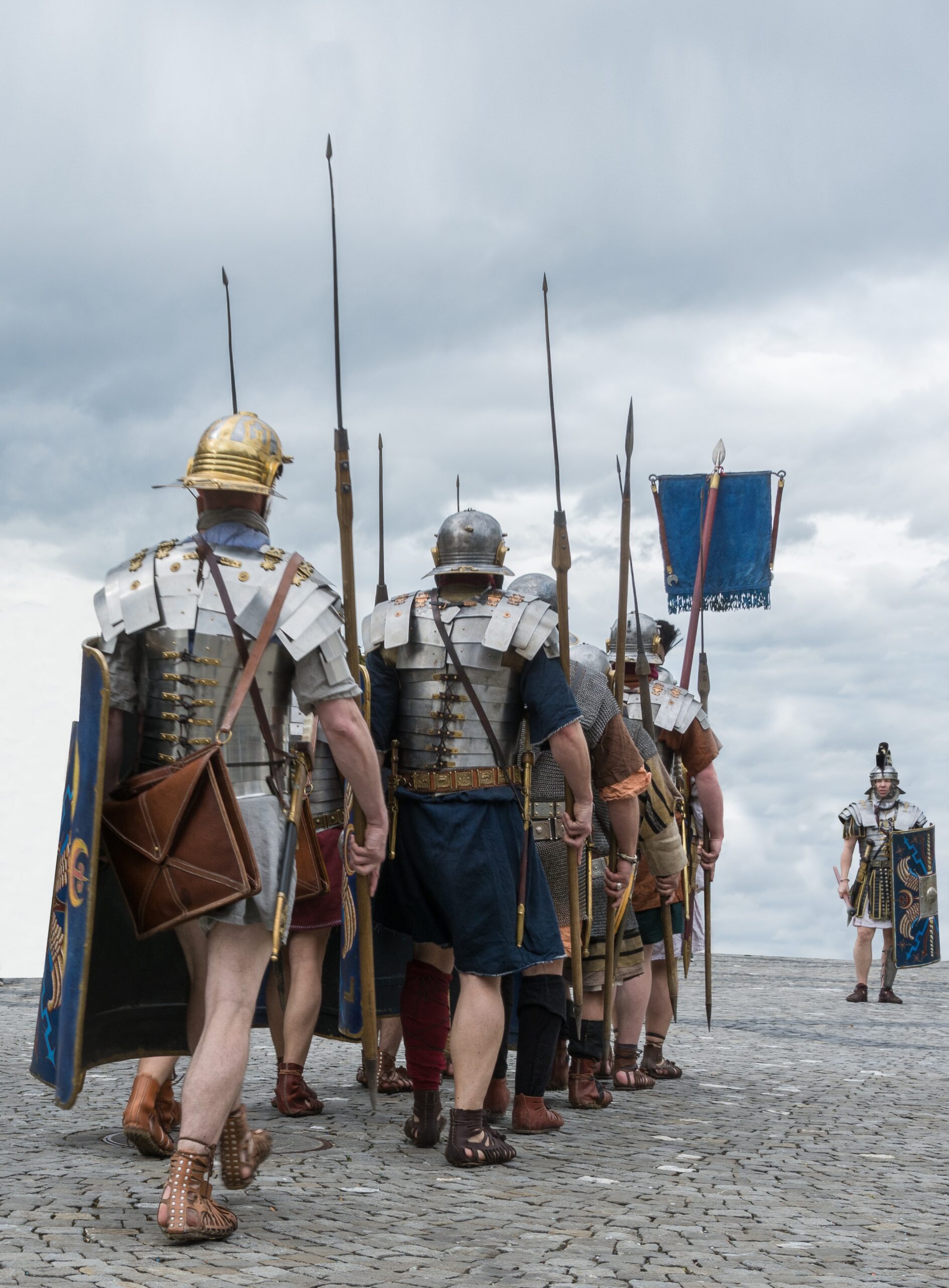
The Roman shield was large enough to cover the entire body. It was made of wood and bound together at the top and bottom with metal bands. And when dipped in water, could extinguish flaming arrows from the enemy.
What are those fiery darts Paul describes in v.16?
The possibilities are endless and different for all of us. But probably best represented by the areas where you are most vulnerable to attack.
Perhaps the doubt, fear, or discouragement the enemy jabs at you. A bad habit you can’t conquer. The lies he whispers in your ear about yourself. Or hurtful words hurled at you by someone else.
Faith is your vote of confidence in God. A reminder you are covered by God’s grace. Secure in God’s love and the assurance He has your back. And destined for His eternal presence.
God’s equipment for spiritual battle includes the helmet of salvation
Satan tries to get into your head. Mess with your mind. Psych you out. He knows if you are saved through Jesus Christ, he can’t pluck you out of God’s hand. Your eternal destiny is secure. So his strategy is to confuse you. Confound you. And drag you down through sin so you’re ineffective for God’s Kingdom.
But knowing your salvation is secure gives you confidence in your fight. Because even though you are still a sinner, and will continue to sin, God’s power helps you resist temptations. And win some of those sin battles too.
In other words, the helmet of salvation is eternal, but also saves you from the power of sin in this life. And encourages you to press on in the fight.
God’s equipment for spiritual battle wields the sword of the spirit
The Bible is God’s word. His truth. And final authority on all subject matter related to this life. God promises it won’t return to him void.
It is your one offensive weapon in spiritual battles. And it’s impossible for Satan to refute. But be warned. He also knows it well and will twist its meaning to serve his purpose. Satan’s allies will do the same.
But it was the authority Jesus turned to when he was tempted by Satan. And King David kept close for use in his own spiritual battles.
Because God’s word penetrates to the soul. Judges the heart. And reveals God’s love and purpose for mankind. Rather than fight in the power of human reasoning, it equips you with the truth and wisdom of God.
Study it. Seek to know it. And memorize it. Because it is THE ANSWER, when you don’t have an answer.
Prayer is not equipment but is critical in spiritual warfare
Prayer may not be equipment, but it is a valuable weapon in spiritual battles. Because it aligns you with the will of God. Activates His power. And keeps you in His safeguarding presence.
More than simply regular habit. It should be a constant conversation with your eternal, loving Father.
Your direct source to God for His strength in the fight.
When it hurts so bad you can’t stand it, Jesus will ease your pain. He offers comfort, peace, and new purpose to those who take refuge in him. Here’s why.
When it hurts so bad you can’t stand it, know that Jesus shares your pain and offers comfort
Pain is an inescapable part of life. From scraped knees, to traumatic psychological wounds, and deep emotional loss. Jesus suffered all of this and more. He understands what you’re going through. And supports those who lean on him.
He also suffered pain and unjust condemnation. And quietly accepted it as part of his mission.
He was mocked by his accusers and executed in the most brutal manner of the day. The one reserved for the most vile criminals.
And yet, he did so willingly. To take your place and mine. Because we are guilty of sin before God.
He suffered humiliation. Agonizing torture. Excruciating pain. And finally, death. At the hands of people who hated him. But he loved in return. People that wanted to kill him. But he wanted to save.
He died so we can live. And comforts those who turn to him.
When it hurts so bad you can’t stand it, know that Jesus mends broken hearts and offers peace
It’s a natural question when we suffer unjustly: Why, God, did you let that happen? Sometimes it takes years to receive an answer. Sometimes you never do.
The death Jesus suffered doesn’t make sense either. Why, God, did you let your own son die? He never wronged anyone. But compassionately healed. And taught people how to live relationally with one another. How to know and find peace with God.
It’s much more than inner peace. Or lack of conflict. But an incomprehensible peace. Where you are reconciled to God.
And that is the only answer for the death of Jesus. It is our emancipation from sin.
Therefore, Jesus knows the depth of your pain. And heals the brokenhearted.
When it hurts so bad you can’t stand it, know that Jesus offers joy and new purpose
The joy of the Lord strengthens you. It doesn’t replace sorrow or eliminate hurt. But you can experience joy in spite of them.
Because joy is not dependent on circumstances. It sees beyond them and is based on God’s promise of an eternal future. Where there is no more sorrow and no more pain.
However, God’s grace is present in this life too. Because He promises to make things work out for good. When you love and trust Him. And submit to His will.
Of course, none of this is easy. Or comes naturally.
You must act by faith. Believing that Jesus is God. And God is sovereign with an eternal plan that has your best interest in mind.
He is your source of strength. Provides reason for living. And hope for the future. Where all questions are answered. And healing is complete.
About Chip Tudor:
Chip Tudor is an author, blogger and freelance copywriter. He publishes humorous Christian drama, books, and thought provoking blogs from a Christian worldview.
Join my list and I'll notify you of new blog posts and send you a monthly newsletter. It features inspirational thoughts, writing tips, and a peek into writing projects. I'll also include my article: Exaggerate to Make Your Presentations Funny. It shows you how to punch up presentations with humor and make them more compelling.