Christians are called to be great. Although, maybe you don’t think you’re one of the great ones. Maybe you do. Either way, this message is for you.
One of the most damaging, disastrous failings of the church in our age is that you and I, “ordinary Christians,” have not responded to God’s call to be great.
Called To Be Great Means Humble, Not Puny
God calls us to be humble, not to be puny. When Jesus rebuked the disciples for jockeying for position in his kingdom, he invited them at the same time to greatness, as long as it was greatness on the right terms: “Whoever desires to become great among you, let him be your servant. And whoever desires to be first among you, let him be your slave” (Matthew 20:26b, 27).
What God Chooses
God chooses public greatness (church-wide, community-wide, or even broader in scope) for certain people and not for others. But I fear there are many that God has called who don’t listen, trust and obey. Some could be great for God, legitimately called by him, but turned their back on it.
This is a great loss to the kingdom of God. A burying of talents that God rebukes. To be great in following what God calls us to requires humility and obedience.
Called To Be Great Means Ready To Pay The Price
We can learn about greatness from John the Baptist from the account in Luke. It uncovers the second chief reason many fearfully approach the topic of greatness. I think it often explains the shrinking from the greatness God call us to:
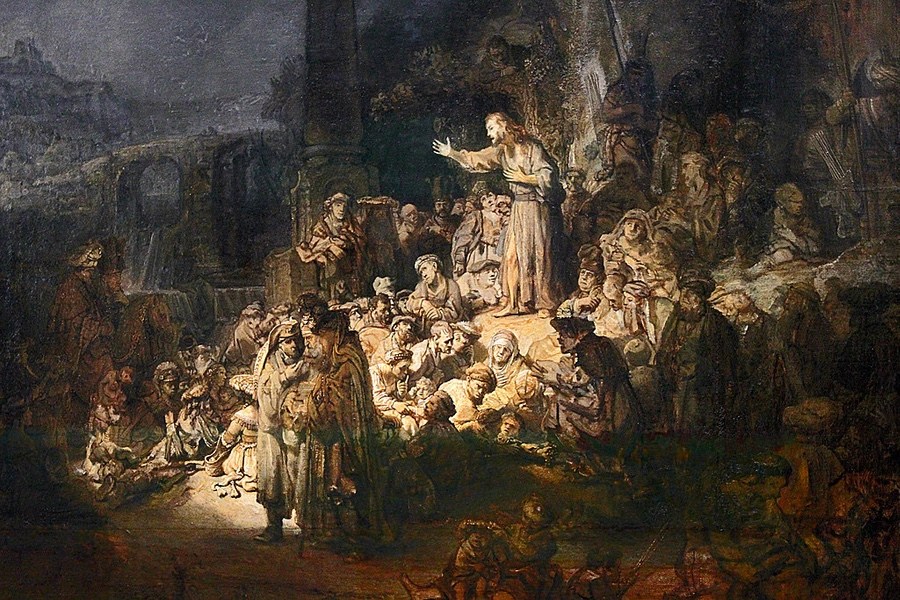
Then he said to the multitudes that came out to be baptized by him, “Brood of vipers! Who warned you to flee from the wrath to come? Therefore bear fruits worthy of repentance, and do not begin to say to yourselves, “We have Abraham as our father.” For I tell you that God is able to raise up children of Abraham from these stones. And even now the ax is laid to the root of the trees. Therefore every tree which does not bear good fruit is cut down and thrown into the fire.” So the people asked him, saying, “What shall we do then?”
He answered
“He who has two tunics, let him give to him who has none; and he who has food, let him do likewise.” Then tax collectors also came to be baptized, and said to him, “Teacher, what shall we do?” And he said to them, “Collect no more than what is appointed for you.” Likewise the soldiers asked him, saying, “And what shall we do?” So he said to them, “Do not intimidate anyone or accuse falsely, and be content with your wages.” And with many other exhortations he preached to the people. But Herod the tetrarch, being rebuked by John concerning Herodias, his brother Philip’s wife and for all the evils which Herod had done, also added this, above all, that he shut John up in prison (Luke 3: 7-14, 18-20 NKJV).
John stirred things up a great deal. He paid a price for it in the end. (Jesus himself did the same, even more so.) But John knew what he was called to do, which included agitating for change in a corrupt culture. Some responded gladly. The king, however, threw him in prison, and later had him executed.
Greatness pays a price. Even “successful” greatness–such as the greatness of Daniel, of Joseph, of many others in our day who see great fruit. Like in churches, mission agencies, government, and military. There’s a price of long hours, much opposition, deep concerns, many pains.
Called To Be Great Means Trusting in God
I think I have too often refused to step toward greatness because of fear: fear of stirring people up, fear of being branded, fear of having to give up the easy way.
I lost the thrilling opportunity to see what God could do through me if I followed him wherever he led. And also, the glory of God, which I could have shared in the wider world, was hidden like a light under a bushel.
Following John’s great example
The desert example of John the Baptist is a hard one to follow. God does not call many to make a solitary stand for him in that way. But He does call us individually to follow him wherever he leads; that is a decision we each make for ourselves.
From there, though, most of us will find opportunities to follow God into greatness by doing it with teams of brothers and sisters in Christ. Oh, for communities of faith that are determined to change their cities, their world! To join a band of believers who charge the enemy’s ground and take it back for Jesus Christ!
About:
Tom Gilson is senior editor and columnist with The Stream. He’s published over 700 articles and several books including his most recent, Too Good to Be False.
Join My E-mail List
And I’ll send you my article: Exaggerate to Make Your Presentations Funny. You’ll learn how to punch up your presentations with humor.
Most people will probably agree it includes one or all of them.
But where do they come from? Blessings randomly sprinkled from heaven? A successful enterprise? An enlighten state of being?
Or maybe something you do? Like giving back to the community or pampering yourself with a soothing hot tub after the kids are in bed?
Because if these words spoken by Jesus Christ are true, then why are so many people miserable? Why is Christmas saturated with sentimental feelings, and yet, the highest point of suicides during the year?
It’s often a time we turn to faith for answers. So as you reflect on life’s deeper meanings during this Christmas season and perhaps your own quest for the abundant life, here are some thoughts to consider.
To Find An Abundant Life Seek a Reliable Source of Faith
I believe happiness and joy are universal gifts from God that are available to everyone regardless of your belief system. Purpose you discover. Contentment you learn.
And we’re all turning to something in our search for them.
What is it for you? Is it proven? Reliable? Authentic? This is where you start.
And as you search, keep this principle in mind: Intangible rewards come from an intangible source. I think this is where many people go wrong.
They pursue the tangible—like money—to gain the intangible—like happiness. But it only leads to what king Solomon calls chasing after the wind. You can’t get there because the two run on parallel tracks.
Of course, there are many intangible paths to choose from. Which is the right one? And how can you know?
I’ve chosen Christianity as the most unique among all religions, paths to enlightenment and sources of happiness, peace, contentment and purpose. I talk more specifically about what makes it unique in my e-book, Christianity for the Average Joe. Check it out for a conversational explanation of what the Christian faith is all about.
Jesus Christ, its founder, claims to be God and the source of abundant life. Something only he offers. An exclusive claim and a big one at that.
Was he egotistical or self-delusional? And does he deliver?
Well, his path is not all that attractive to a contemporary mindset. It features denying yourself, following him and obeying his commands. So not only is he crazy, you’re a little crazy to follow him.
Which maybe explains why there’s not a bigger crowd following him today.
Even though I don’t think happiness, peace, joy, contentment and purpose are exclusive to following Jesus, he enhances them. Drives them deeper into my life. And builds in a resiliency that flourishes even through life’s ups and downs.
To Find An Abundant Life Embrace a Life Long Faith Journey
If you prefer something rational, materially rewarding or more inward and mystical, forget Jesus. Following him is the opposite of all that.
It’s a faith journey that’s outward focused—an approach radically different than every other religion and spiritual teaching. A formula that lives out his practical instructions in a community of believers.
Rather than a short-term fix, it’s a long term solution. And that’s what you should look for. Something that endures for a lifetime in the realities of a confusing world.
Contrary to some opinions, Christianity doesn’t have all the answers. There’s a daily struggle with doubts and your own, imperfect humanity. But there’s also an unexplainable, redemptive and personal presence that empowers and transforms you from the inside out.
And along with the other intangibles of happiness, joy, contentment and purpose, you find the most elusive, yet powerful expression on earth…hope. In this, Christianity stands alone.
To Find An Abundant Life Pursue a Faith that Keeps Pleasure in Proper Perspective
Ever watched a TV or movie scene where someone stumbles across the desert, dying of thirst and sees an oasis in the distance, but when they get there it’s a mirage?
That’s how pleasure is.
Like happiness and joy, I believe it’s a universal gift from God for our enjoyment. And when exercised and moderated within its design enhances joy, happiness, peace and contentment.
But ignore the instructions on proper use and what is intended as wholesome and sweet quickly turns unwholesome and sour. Followed by emptiness…longing…even bondage.
Pleasure seduces and allures with its charm. But when experienced only for its own sake, is a mirage. Another dead-end path to happiness and joy that leaves you feeling cheated and empty.
It contributes to and is part of an abundant life. But is unsatisfying by itself.
I guess, when you get down to it, the abundant life is so much of what so few of us want to pursue. And therefore, find it elusive. Always beckoning…and just out of reach. When it’s right in front of us all the time.
I wish you the best in your search. And hope you enjoy an abundant life and meaningful experience this Christmas season.
Is your Christian faith fit or flabby? Spiritual health is comparable to physical health. It’s better when you exercise it. Here are three benchmarks to measure your spiritual fitness.
Is your Christian faith fit or flabby? A fit faith makes a commitment to Jesus Christ.
If anyone would come after me, let him deny himself and take up his cross and follow me. (ESV, Matthew 16:24)
Faith, by nature, involves a risk. And exercising Christian faith includes practices and spiritual disciplines that train disciples in righteousness. Similar to the fitness training of athletes pursuing their sport.
And when you commit to following Jesus Christ, you carry a cross that includes adversity. Especially from the secular culture and scoffers who claim Christianity is a crutch for the weak minded. Because while you find purpose and satisfaction in imitating the life of Jesus, obeying his commands, and pursuing holiness, few people will commend you for it. But rather, despise, ridicule, and persecute you.
Furthermore, you relinquish two things the human heart holds dear. Pride and self-reliance. And exercise faith by humbly and confidently moving forward and trusting the God who keeps His promises.
Is Your Christian Faith Fit or Flabby? A fit faith moves from belief to action.
So also faith by itself, if it does not have works, is dead. But someone will say, “You have faith and I have works.” Show me your faith apart from your works, and I will show you my faith by my works. (ESV, James 2:17-18)
Belief in Jesus is where you start. But not where you stay. Because genuine, deeply held belief always moves to action. And actions are what James is talking about. Not that good works save you, but they demonstrate through Godly actions, the salvation you’ve received. A follower of Jesus Christ as Savior and Lord who strives to imitate his life.
This is why regular, spiritual disciplines of Bible study, prayer, worship, and fellowship with other believers are so important. They build God’s truth into your life and equip you to live out your faith.
Is your Christian faith fit or flabby? A fit faith embraces obedience.
The Bible is God’s word for living as a disciple of Jesus. And his followers strive to obey it.
In a day of my rights, my truth, and me, myself and I, obedience is an unpopular aspect of the Christian faith. And for many, an absolute, Christianity deal breaker. But it’s the difference between worshiping the Almighty God and worshiping yourself as a god.
Because the Christian faith acts on God’s truth and seeks His Kingdom. And when you commit to it there are some pretty awesome benefits.
Like as you exercise faith, your capacity for even greater faith increases. You experience more joy and sense of eternal purpose. And you suddenly see and recognize God’s Spirit working in amazing ways.
So if your spiritual life seems dull and powerless. In a spiritual rut rather than a growing relationship. Consider restructuring your sedentary spiritual routine into a Divinely focused, fitness regime.
Chip Tudor is an author, blogger and professional writer. He publishes books, humorous Christian drama, and thought provoking blogs from a Christian worldview.This blog is originally published here.
Looking for a Bible Study for yourself or small group??
A reasonable approach to Christian faith. Is the Christian faith the complete opposite of intellectual reason? I don’t think so and here’s why.
A reasonable approach to Christian faith. They are more similar than you think.
Some claim that Christian faith and intellectual reason are mutually exclusive. But I think they actually work together.
Let me explain.
The argument that pits faith against reason generally goes like this: Christian faith is a subjective, religious experience that is based on little or no evidence.
Reason on the other hand, involves facts. And it logically follows the evidence to intelligently reach a conclusion.
In short, faith is subjective and reason is objective.
Now I will be the first to admit that faith is subjective in nature. There’s no getting away from it. But at the same time, an honest discussion of Christian faith must include the OBJECT of its faith—Jesus Christ.
A reasonable approach to Christian faith. Jesus Christ is the object of our faith.
When Christians talk about faith, they talk about faith in Jesus Christ. And Jesus Christ is a historical figure. A real person. The things He said and did are recorded by eye witnesses. So the details around His birth, the miracles He performed, the claims He made, His death by Roman crucifixion, and the disappearance of His body from the grave are all confirmed facts. They are all evidence for you to consider.
It’s where reason comes in.
And there is all kind of literature for you to explore and reason through—Scriptural as well as non-religious, historical documents.
Anyone that is truly committed to intellectual integrity should at least understand what Christianity is about before dismissing it. Why not start with a general overview of its basic beliefs? You’ll find an easy to read explanation of them in the book, Christianity for the Average Joe.
Of course, no matter how convincing or unconvincing you consider the evidence, there won’t be enough proof either way.
You’ll have to make your decision based on faith. And so my definition.
Christian faith is the place you stand between what you know and believe.
There is a lot of information about Christianity for you to explore. A lot of evidence to reason through. But ultimately it comes down to faith. That’s where you’ll have to stand to make your final decision…to believe.
Yes…faith is subjective. And yes…it is an experience. One that leaves you forever changed.
About Chip Tudor:
Chip Tudor is an author, blogger and professional writer. He publishes books, humorous Christian drama, and thought provoking blogs from a Christian worldview.This blog is originally published here.
Enjoy Humorous Christian Books?
The whale image used for this blog is a cartoon illustration out of my book Family Stew. Each chapter begins with a professionally drawn, cartoon illustration. It’s a collection of stories from the days of our young family along with summary thoughts from a Christian perspective.
Join my list and I'll notify you of new blog posts and send you a monthly newsletter. It features inspirational thoughts, writing tips, and a peek into writing projects. I'll also include my article: Exaggerate to Make Your Presentations Funny. It shows you how to punch up presentations with humor and make them more compelling.