Balaam’s talking donkey is a Bible story that fits well into a cartoon or sitcom. But the Bible? And yet, there it is. So what does an ancient talking donkey teach us today?
The story takes place as Israel approaches the nation of Moab on its way to the promised land. And this made King Balak of Moab nervous. Because Israel was conquering everyone in their path. And Moab was up next. So King Balak called on Balaam, a pagan prophet to curse them.
Balaam was a greedy, unethical man that practiced divination and magic arts. For him, this was a way to earn fast, easy cash.
But God threw a wrench in the deal by forbidding Balaam to curse Israel. Because Israel had His blessing.
The Bible Story Of Balaam’s Talking Donkey Teaches You Can’t Thwart God’s Sovereign Will
God wouldn’t let Balaam curse Israel, but gave him permission to visit King Balak. Although Bible scholars suggest he didn’t intend to obey God’s instructions. Therefore, God sent an angel to block the road. And impress on Balaam that He was serious about those instructions. Deadly serious.
So the angel blocks the road and Balaam can’t see him, but the donkey can. And doesn’t try to pass, even though Balaam beats him. Which is when the donkey speaks up–literally! And after the conversation, Balaam sees the angel in the road with a sword and realizes the donkey saved his life.
The point is, God is sovereign. And what He ordains will come true. He has a plan for the end of this world. For eternity. And for you.
Of course, you have free will too. And can make choices and changes within God’s permissive will. But not His sovereign will. Balaam finally got the message. Although it took a drastic event to get his attention, open his eyes and listen to God.
What might this look like today?
The Bible Story Of Balaam’s Talking Donkey Teaches That God Can Be Creative In Accomplishing His Will
God is not a stuffed shirt. An angry old man tossing lightning bolts. He’s creative. Has a sense of humor. And introduced a talking animal long before any of our TV shows. And it’s not the only time God used quirky methods to carry out His divine plan.
He told Gideon to cut his army of over 30,000 down to 300. Armed them with trumpets and torches. Had them surround the army of their enemy, blow the trumpets, hold up the torches and shout. He had Joshua march around the city of Jericho once for 6 days straight. And on the 7th day, march around it 7 times, blow trumpets and shout.
Can you imagine how ridiculous the Israelites must have looked? And felt?
The point is, God often tests your faith by asking you to trust Him. He invites us to join in working for His Kindgom. But often chooses unlikely leaders and surprising methods to carry out His will.
The Bible Story Of Balaam’s Talking Donkey Teaches That God Expects Us To Live By Conviction
God expected Balaam to stand by his convictions. And expects us to do the same. Of course, standing by convictions assumes you have moral standards. Which is the whole point of the Bible. It sets out God’s plan, purpose and path for this life and beyond. It’s His divine instruction manual.
The problem for Balaam is he appeared to lack convictions and moral standards. He was all about pursuing money. And since blessing Israel was part of God’s sovereign will, God made sure Balaam followed through on it.
Unlike the story of Balaam, God usually lets you choose to obey Him or not. Although there are encouragements and warnings about the benefits and consequences for when you do and don’t.
But living by Godly convictions is not easy. Especially in a world driven by material gain. Which is why the Bible is such an important resource. Because it provides instructions, principles and yes, commands for us to follow. Not to overwhelm us with rules, but to guide us in living holy lives that maintain good relationships with others.
It shows you how to live your best life now and forever.
The Bible Story of Ruth teaches about Godly love. It starts with the love of a daughter-in-law for her mother-in-law. Then between a man and woman. And finally, the redeeming love of God for mankind.
The Bible Story Of Ruth Teaches Godly Love Makes God A Spiritual Priority
In the Bible story, Ruth and Orpah were the daughter-in-laws to Naomi. All became widows. And life for a widow during this ancient time was difficult. Because women had little access to gainful employment. And were therefore, highly dependent on husbands and family members for support.
Naomi was a Jew, but Ruth and Orpah were a Moabites. So Naomi urged them to return to their families in Moab where they had a better chance of finding other husbands. While Naomi planned to return to her home in the land of Judah.
So Orpah returned to Moab, but Ruth stayed with Noami. Making it clear she would not only follow Naomi; she would also follow Naomi’s God.
It was not a practical decision. Because the prospect for two widows with no means of support was bleak.
For Ruth however, it was a spiritual decision. One that exercised faith. Not just in Naomi, but in Naomi’s God.
When God is a spiritual priority and you make decisions on faith, it often looks impractical from a secular viewpoint. But you do so because you know God has your back. And you don’t measure the size of your problems, but the size of your God.
The Bible Story Of Ruth Teaches Godly Love Is Redemptive
According to Jewish law at this time, a kinsman-redeemer was a male relative who acted on behalf a relative in trouble, danger, or need. And Naomi and Ruth qualified for all three.
Ruth ended up gleaning for food in the fields of a rich, Jewish man named Boaz, who just happened to be a distant relative of Naomi and qualified as a kinsman-redeemer.
And Ruth caught his attention. Not just because of her physical beauty, but also the inner beauty of her character. Like every good love story, the two fell in love, married and had a son named Obed. And in his line of descendants was Jesus Christ.
That’s why the story of Ruth is so important. It illustrates, not just how people demonstrating Godly love can redeem others, but how God redeems us.
As people separated from God by sin, we too are in spiritual need. And Jesus Christ rescues us as our kinsman-redeemer.
The Bible Story Of Ruth Teaches Godly Love Is Sacrificial
Ruth’s faith decision required a willingness to sacrifice. What if she had gone back to Moab with Orpah?
That would mean no marriage to Boaz. No son Obed. No Jesus Christ. And where would that leave us?
Of course, Jesus made a significant sacrifice too. Which involved dying on a cross and resurrection three days later. Which he did willingly to demonstrate God’s love for us.
It’s remarkable isn’t it? How God weaves what looks like so many random stories into a very clear, intentional work of redemption for mankind. But God doesn’t just care generally about humanity. He cares specifically for you. And your story. And wants to change it from bondage in sin to freedom in Christ.
But like Ruth, you have to make a spiritual decision. On faith. And accept the redeeming gift of Jesus Christ.
And when you do, you’ll experience a new kind of love story. One with a happily ever after. That lasts for eternity.
The Bible story of David and Bathsheba teaches about faithfulness to God. Yes, it’s a story about faithfulness in marriage. But the covenant of marriage is used in the Bible to illustrate the covenant between God and His followers. The result when faithfulness is broken. And how it can be restored.
The Bible Story Of David And Bathsheba Teaches That Failure in Faithfulness Is Not A Deal Breaker
What a relief, right? Because we’ve all been unfaithful to God in some way. Maybe not in marriage. But in a multitude of others. You pick.
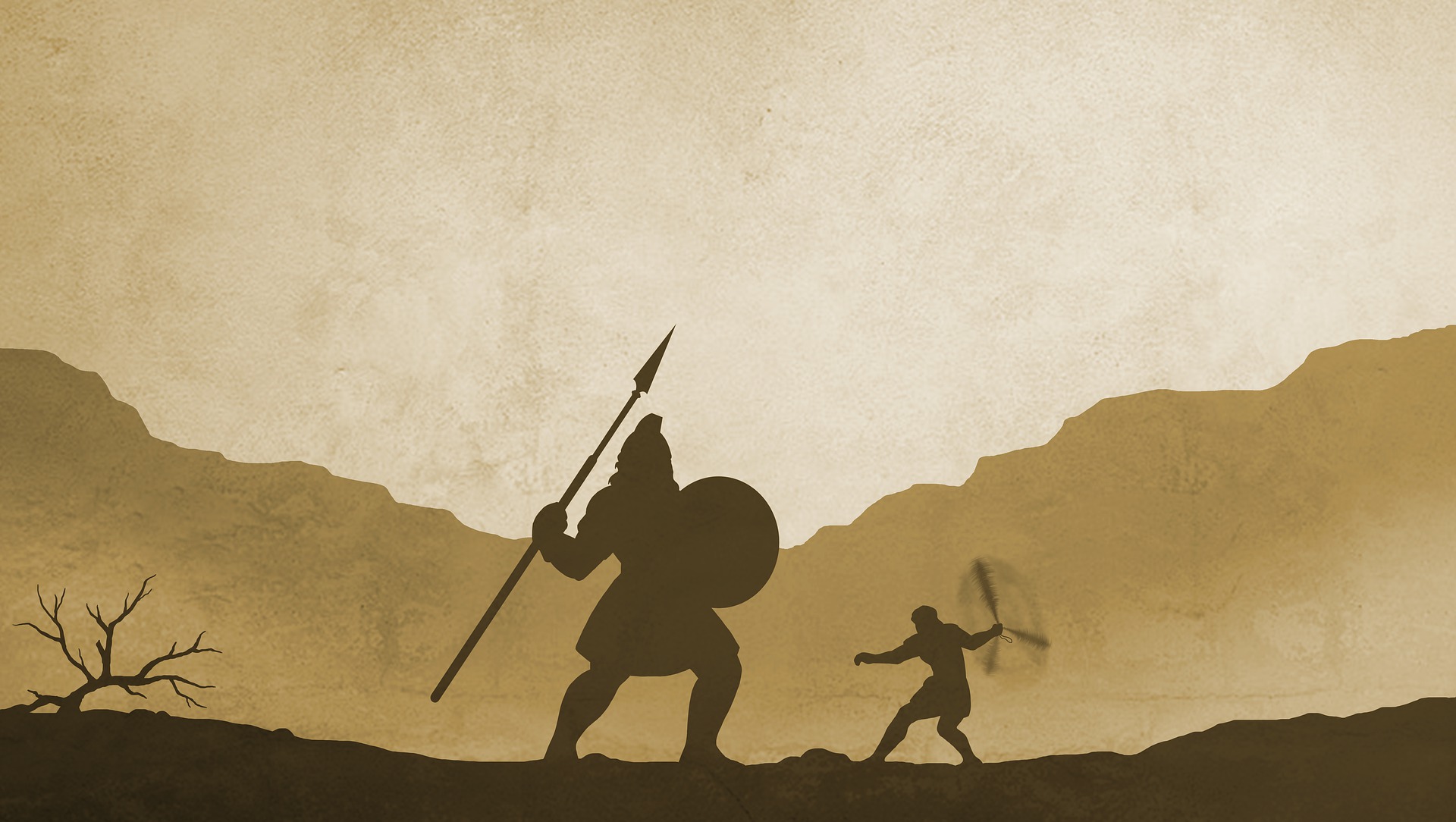
And there’s irony in the story. Because David’s whole rise to fame and popularity was because of his faithfulness to God. He killed Goliath in an epic, one on one battle. And from there, he distinguished himself as a military leader and was eventually crowned the king of Israel.
Where he had it all. Money. Power. And God’s blessing in his life.
And yet, he messed up royally by seducing the wife of one of his soldiers. She became pregnant. And to cover it up he had the man killed.
It’s a sober reminder. We’re all one bad decision away from destroying our lives. And yet, while David violated his faithfulness, God does not completely shut him off. Not because of David, but who God is. A heavenly Father full of grace and mercy. Who wants to restore us.
The Bible Story Of David And Bathsheba Teaches Faithfulness To God Strives for A Proactive Spiritual Life
How did David create such a mess in the first place? He started by slacking on self-discipline. When he should have been out leading his army, he elected to stay home and take it easy. And became passive, bored and self-indulgent.
Sure. It’s okay to take vacations. Enjoy pleasurable activities. Pursue things you like. But ongoing faithfulness to God requires spiritual self-discipline.
David let down his guard. Like we all do at times.
Which is why faithfulness to God requires spiritual diligence. And is best practiced in a proactive manner. Rather than focusing on the negative—what are the things I shouldn’t do? It focuses on the positive—what are the things I should do?
The Bible Story Of David And Bathsheba Teaches That Faithfulness To God Is Restored Through Humility and Repentance
David was confronted with his sin by the prophet Nathan. Did David know he was sinning with Bathsheba? Probably. Just like we often know when we are sinning, but choose to ignore or rationalize it. Maybe David was doing the same thing.
But to his credit, when confronted by the prophet Nathan, he quickly confessed and repented of his sin. And that is the key to restoring a relationship with God.
The Story Of David And Bathsheba Teaches That Faithfulness To God Accepts But Is Not Defined By Consequences
The child born out of David’s sinful behavior died shortly after birth. David accepted the consequences and then worshipped God.
In other words, David did not let his sin define him. He didn’t make excuses, shift the blame or let the consequences keep him from pursuing God.
He returned to a life of faithfulness to God. Which is why he is called a man after God’s own heart.
And the story offers hope to all of us. Because despite our best intentions, we all still sin. But God’s grace is abundant and his forgiveness unmeasured. So even when we fail, we can return to a life of faithfulness to God.
The Bible Story of David and Goliath is one of the most popular stories in the scriptures. Because we naturally root for the underdog. But the story offers spiritual lessons too. Here are three of them.
The Bible Story Of David And Goliath Teaches You To Maximize Your God-Given Strengths
It seems like common sense, right? Focus on what you do best. Maximize your strengths. But it’s easy to lose sight of this. Pursue the latest trend, coolest technology or fashionable idea. Even when you’re not properly trained in how to effectively use them.
So what ability are you overlooking? What skill are you underestimating?
Even though King Saul gave David the latest in military equipment, David used what he was most familiar with it. It seemed woefully inadequate against the modern equipment Goliath had, but let David perform his best. And ultimately led to his success.
Goliath laughed at David. Mocked him. And David responded with a head shot that rocked his world.
The Bible Story Of David And Goliath Teaches That God Empowers Followers Who Call On Him
On a human level, the story is a clear mismatch. Goliath was a massive soldier in his prime. A confident, war veteran. Well equipped and combat proven.
David was barely a teenager. A sheep herder. But not completely without skill. He was good at his job. Which included killing a lion and a bear. So he had reason for confidence. Yet was still, woefully outgunned.
But that’s the thing. It’s not simply a human level story. And David’s real confidence was not in himself, but in his God. The key to this battle was neither his weapons or skill. It was calling on the name of his Almighty God.
Calling on the name of God assumes a sense of dependence. It requires submission and faith. And recognizes that God is sovereign. Which means there’s no guarantee of earthly success. Because some heavenly victories are won on the other side of this life.
But calling on the name of God engages the power of God. For the Kingdom of God. And puts you on the right side of eternity.
The Bible Story Of David And Goliath Teaches That God Is A Deliverer
God used David to defeat Goliath and deliver Israel from their Philistine enemies. Like He used Moses to deliver Israel out of Egypt. Delivered Daniel from the lion’s den. Along with many other stories of spiritual liberation.
Throughout history, and even today, God uses His followers to accomplish His will. To use their gifts and talents to advance His Kingdom. By calling on the power of His name.
In the ultimate battle for the souls of mankind. To deliver this world from the bondage of sin through the sacrificial death of David’s most well-known descendant–Jesus Christ. Who offers eternal deliverance.
The Bible Story of Gideon from the book of Judges has leadership lessons for those who serve the Kingdom of God. It demonstrates God’s criteria in the leadership selection process. Which is much different than worldly standards. Here are three Kingdom leadership lessons the story teaches.
The Bible Story Of Gideon Teaches That God Cares More About Availability Than Ability
When God’s angel approached Gideon, he was busy threshing wheat in a winepress. Not on a threshing floor as normal. Why? Because the winepress let him maintain a low profile. If his enemies, the Midianites saw him, they might raid his home and take everything.
The angel announced that God had chosen Gideon to lead the nation of Israel. But Gideon didn’t believe it because he considered himself a nobody. And immediately pointed out his lack of qualifications.
Runt of his family…
That ranked on the bottom rung of social standing…
From a community last among the nation of Israel…
In other words. He had no particular skills. No accomplishments. Nothing to instill confidence in him as a leader. Why would anyone even follow him? And God’s answer: Because He would be with him.
But wait, you say. What about my Valedictorian college education? Superior skill set. Many leadership conferences I’ve attended? They aren’t important?
Yes. But the point is, God isn’t impressed with your abilities and credentials. He gave them to you. Can take them away. Or give them to a rock.
Regardless of your many qualifications or lack of them, God’s first and most penetrating question in Kingdom leadership is the same.
Are you available?
The Bible Story Of Gideon Teaches That Kingdom Leadership Requires Courage
God gave Gideon a specific first assignment. A big one. And it required courage. Tear down the community altar of Baal and the Asherah pole his fellow Israelites worshipped.
Of course, doing the right thing is seldom easy. Especially when you are the lone voice in the crowd. When doing the right thing in the eyes of God is the wrong thing in everyone else’s eyes. And invites their wrath.
So give Gideon credit. He summoned up the courage and tore them down. But maybe not full credit. Because he did it at night while everyone was asleep hoping he wouldn’t be discovered.
And yet, is there a modern parallel to this story? And a challenging question to Christ-followers today? As we see our communities reject God’s commands are we standing up for God or keeping a low profile? Because standing up is risky and might invite the wrath of our communities.
And what might an act of Godly courage look like?
Perhaps it wasn’t Gideon’s finest moment. His most brazen act of courage. But it was a start. And the turning point for both Gideon and the nation of Israel. As God empowered Gideon for Kingdom leadership.
The Bible Story Of Gideon Teaches That Kingdom Leadership Requires Obedience
Finally, Gideon demonstrates real leadership and successfully recruits a large army to take on the oppressing Midianites.
But God tells him it’s too large. And gives him the kookiest military engagement instructions of all times. Starting with orders to trim his fighting force down to 300 soldiers.
God wanted to make it clear that Gideon’s success was only possible by God’s power. Because his human nature, like ours, tends to take credit for what belongs to God.
So following God’s instructions, Gideon arms his meager 300 soldiers with trumpets and torches. They surround the Midianites camp at night and at a given signal blow the trumpets and hold up lighted torches with a shout.
Then watch as their enemy, in confusion, turns on and kills one another.
The key was simple obedience to God. Simple to say that is. Hard to practice. Because obedience requires humility, trust and submission to God’s will. None of which come easily or naturally.
And yet, Kingdom leadership both demands it and demonstrates amazing works of God because of it.
Join my list and I'll notify you of new blog posts and send you a monthly newsletter. It features inspirational thoughts, writing tips, and a peek into writing projects. I'll also include my article: Exaggerate to Make Your Presentations Funny. It shows you how to punch up presentations with humor and make them more compelling.