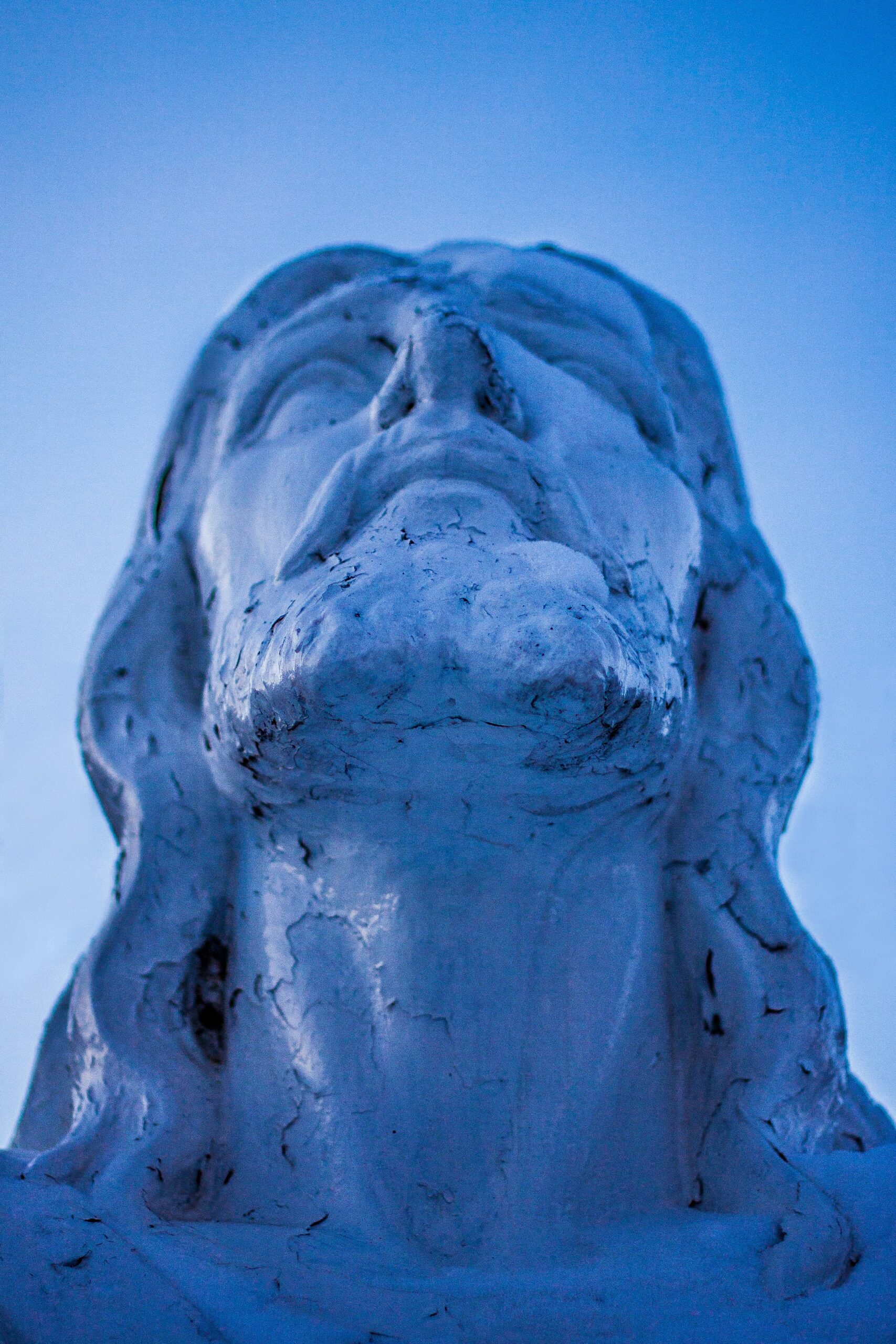
What’s the mind of Christ? Because the apostle Paul claims to have it in 1 Corinthians 2:11-13. Do you? And if so, what does it mean? Here are some thoughts to consider.
Your perspective, attitudes, and behaviors originate and incubate in your mind. So the prevailing content there plays a major role on the actions that follow. The mind of Christ directs you towards actions that honor God.
What’s the mind of Christ? It’s the presence of God’s Spirit
For who among men knows the thoughts of a man except the spirit of the man which is in him? Even so the thoughts of God no one knows except the Spirit of God. Now we have received, not the spirit of the world, but the Spirit who is from God, so that we may know the things freely given to us by God, which things we also speak, not in words taught by human wisdom, but in those taught by the Spirit, combining spiritual thoughts with spiritual words. (ESV, 1 Corinthians 2:11-13)
The mind of Christ comes with the presence of the Holy Spirit in the life of a Christ-follower. He enters your life when you ask Jesus Christ to be Savior and Lord. The Spirit’s indwelling presence conforms your desires to imitate Christ and align your thoughts with God’s thoughts as revealed in His word. It begins by demonstrating the same attitude as Jesus.
The natural person lacks this presence because the Spirit responds by invitation only. And the natural person is further handicapped because understanding spiritual truth requires spiritual discernment. And God’s Spirit is the discernment interpreter.
What’s the mind of Christ? It’s a perspective that makes seeking the Kingdom of God a priority
Seek first the kingdom of God and all these things will be added to you as well. (ESV. Matthew 6:33)
The Kingdom of God is an eternal game changer for those who seek it first. Because it replaces eternal uncertainty with confidence. Rather than face death with anxiety, you’re filled with hope of an everlasting joy. And the anticipation of a forever future that is better than here and now.
It involves an agenda of selfless service rather than selfish indulgence. A counter intuitive expression of God’s love. Because when you seek the Kingdom of God, you care about what God cares about. Seek to know and follow His will. And form your perspective by filtering the messages of this world through the lens of scripture.
It’s a mind on a purposeful, ongoing journey of transformation
Those with the mind of Christ focus on thoughts that honor God. They study God’s word and follow His precepts. But recognize that sinful failure is inevitable in this world, Fortunately, the mind of Christ is renewable. And is spiritually restored through confession and repentance.
It’s a purposeful journey of discipleship that starts and stops, rises and falls, advances and retreats. Fueled by faith and driven by trust and obedience. Always pursuing but never arriving in this life. A journey travelled with other disciples in community that forms itself in the image of Christ. Navigating all the struggles and difficulties this world presents. But pressing on with the promises and power of God.
Because God’s grace cannot be subverted. His mercy won’t be denied. And His Kingdom will prevail. FOREVER.
God’s path to greatness is described by Jesus in the gospels of Matthew, Mark, Luke and John. And he uses children as an example.
Of course, modern society has its ideas about greatness too and assigns it a special acronym: G.O.A.T. (Greatest of all time)
It means ranking the highest score. Attaining the pinnacle of pursuit. Excelling above everyone else. But Jesus turned the idea upside down and compared it to children. Here are three things I think he means about God’s path to greatness.
God’s path to greatness is unassuming and unpretentious
Jesus overheard his disciples arguing about who would be the greatest in the Kingdom of God. And their conversation was similar to modern ideas about greatness. Those at the top of the spiritual ladder. Who will be In charge in heaven. The best of the best. In a religious sense, that is.
But what drives this? Well, it probably starts as teenagers when we begin to wrestle with with self-image and comparison. How do I look? Do people like me? Am I popular? And this impacts our behavior and how much of our true selves we reveal.
Children, however, are unassuming and unpretentious. They accept what you tell them on face value and don’t hide behind superficial masks or seek recognition. What you see is what you get because they are unassuming and unpretentious. It’s a good example for all of us to follow.
Jesus is not saying to be foolishly naive. But to be honest and straightforward in all our relationships. To avoid comparing and competing and strive for authenticity.
God’s path to greatness gives others the benefit of the doubt
Children speak their minds without filters and express their thoughts and emotions openly. And since they speak honestly, they assume you do too and believe what you tell them. They also assume people have good intentions and look for the best in others.
Looking for the best in others is a trait you also see in Jesus. He regularly confronted people in their worst moments and yet he healed them, encouraged them with hope, and challenged them to behave better.
Jesus, like children, always gave people the benefit of the doubt. He saw their sin, but didn’t let it affect how he related to them. He saw clearly into their hearts, but chose to act towards them rather than react to them.
It is this aspiration that should drive those seeking greatness in God’s Kingdom.
Jesus taught that greatness means serving others
It was during his Last Supper with the disciples that Jesus presented one of the most counterintuitive teachings in scripture. It’s not natural even for children.
Why? Because despite all their innocence, they enter this world with a sin nature. Just like the rest of us. And one of the first words children learn when playing with other children is “mine.”
But Jesus clearly taught its importance for those who seek greatness according to God’s standard. It is putting the needs of others first and serving them. It is hard to do because it goes against our sinful, selfish nature. And often requires the very presence and power of God in our lives.
And still, we will regularly fail. But in Jesus’ willing, sacrificial death for our salvation, we have a perfect example to follow.
What does it mean to be born again? When Jimmy Carter ran for president in 1976 he called himself a “Born Again” Christian. But Jesus first used the term in his conversation with Nicodemus recorded in John 3:1-21. Here are some thoughts on what it means for us today.
What does it mean to be born again? It means you recognize there’s an entrance requirement to heaven a lot of people are missing
V. 3 …unless one is born again he cannot see the kingdom of God.
The term “born again” was a new idea when Jimmy Carter used it and it was new for Nicodemus too. His confused reaction proves it. Probably because he assumed he already met those qualifications. After all, he was a faithful Jew. Even better, a faithful Pharisee. But Jesus throws him a curve ball by saying that something else is involved.
The whole “born again” idea confuses people today as well. They assume if you believe in God and Jesus, maybe attend church and do good things it makes you a Christian. But here, Jesus says that is not enough. It actually involves a second birth.
What does it mean to be born again? It means you understand there are two different kinds of birth
V. 5 Truly, truly, I say to you, unless one is born of water and the Spirit, he cannot enter the kingdom of God.
Jesus presents a spiritual idea that Nicodemus doesn’t even recognize as a spiritual idea. A bit ironic don’t you think? Here he is, an expert teacher in the Jewish religion, completely baffled by what Jesus says. He asks Jesus if he is talking about a physical birth.
He had to know that was not what Jesus meant. But Nicodemus was so blind to his own spiritual need, and so unaware of that blindness, he could not even consider the possibility that his spiritual life was missing something. What was Jesus talking about?
Jesus clarifies it in John 3:6-8 by talking about two births: a physical one and a spiritual one. And what Nicodemus lacks is spiritual.
There’s a similar spiritual blindness affecting people today. Rather than concede their good and virtuous acts are not what Jesus is looking for, they simply ignore this passage.
Jesus must be talking about the jerk who lives down the road. But look closer. He’s talking about all of us.
It means you believe in and follow Jesus Christ as Savior and Lord
V. 14 As Moses lifted up the serpent in the wilderness, so must the Son of Man be lifted up, that whoever believes in him may have eternal life.
Jesus chastises Nicodemus as a teacher for his lack of understanding, but then patiently reminds him that he came to sacrifice himself on a cross. And it makes you wonder. Why did Nicodemus not know this? Because Isaiah prophesized extensively about what the Messiah would suffer.
And the answer for Nicodemus is probably similar to many people today. It’s because we form our religious beliefs around our own opinions and lifestyles rather than the truth of scripture. The Bible consistently teaches about the existence of sin. And the result of sin is spiritual death. And that is an unpleasant thought we’d rather not face.
But Jesus suddenly switches to the positive. And rather talk about death he promises life with probably the best known and quoted scripture in the entire Bible.
For God so loved the world, that he gave his only Son, that whoever believes in him should not perish but have eternal life. For God did not send his Son into the world to condemn the world, but in order that the world might be saved through him.
When civil and moral order disintegrate, chaos ensues. We see this happening today, but it’s not new. It shows up in an Old Testament story presented in Judges 19-21. Here are some thoughts for us to consider.
There are two key statements that drive the story.
In those days when there was no king in Israel
Everyone did what was right in his own eyes
They are like bookends. The first appears as the first verse in chapter 19 and the second as the last verse in chapter 21.
And the unfolding story between them reveals the most horrible acts that humans can inflict on one another. It demonstrates the moral degradation and evil capacity of a sinful heart with no civil or moral restraint.
When civil and moral order disintegrate and no one is in charge
During the period of the Judges, the 12 tribes of Israel were essentially 12 independent clans surrounded by enemies who raided and oppressed them. The Judges were military leaders that God raised up to unite the tribes during this time to fight these enemies. Essentially, the Judges kept the nation together enough so it wasn’t wiped out by its enemies.
But there was no civil law or governing authority except within each tribe. Or a consistent, moral standard guided by the Jewish religion.
Within this context is the story of a Levite man who takes a woman as a concubine. But when she leaves him and returns to live with her father, he follows to win her back. And during the return trip home, they stop for the night in the town of Gibeah in the region inhabited by the tribe of Benjamin.
When civil and moral order disintegrate and there’s no moral conscience
There weren’t many accommodations for travelers during this time. So the Jewish people had a hospitality custom. When you were in Jewish town, you waited in the town square and it was custom for a town resident to take you in for the night. So the Levite and his concubine waited in the square and finally, a man returning from working in the field offered to put them up for the night.
But worthless men of the city surrounded the house with evil intent for the Levite. Hospitality rules made the resident personally responsible for his guest’s welfare. So he pleaded with the evil men to stop, but they refused. And there was no one to call for help.
From here, the story recounts a list of moral atrocities.
Evil men from Gibeah ignored a time honored, moral custom
The sexual abuse and murder of the Levite’s concubine
Dismemberment of a dead body
The tribe of Benjamin refused to hand the perpetrators over to Israel for justice
A war is fought between Israel and the tribe of Benjamin that cost thousands of lives on both sides
After the war, Israel had to make an unethical provision to keep the tribe of Benjamin from extinction
When civil and moral order disintegrate you are primed for destruction
Throughout the Old Testament Israel had a hot and cold relationship with God. When they morally disobeyed, God let enemies conquer and place them under subjection. But when Israel turned back to God, he delivered them.
Rome is another example of how immoral behavior weakens a culture. And many historians cite the increase of immorality in Roman society as a contributing factor in its fall. Certainly, the growing level of unrestrained moral and criminal behavior in our nation makes us weaker and more vulnerable to our enemies.
Wonder why God left such a gruesome story in the Bible? Maybe so we can see where our current course is headed.
The Gospel writes a new story
The story in Judges 19-21 is tragic. But it’s not the end. Because a thousand years later, the gospel story brought hope. It’s the story of Jesus Christ, the Son of God, who sacrificed himself for our sin. He redeems us, spiritually transforms us, and empowers us to walk in righteousness. The gospel writes a new story for every person who chooses to follow Jesus.
And as people change from the inside out, heart by heart, society changes for the better. And for a much happier ending.
The question Jesus asked we all must answer is presented in Matthew 16:13-16. Do you know how you will answer it?
The question Jesus asked we all must answer was presented to his disciples
Jesus did not directly and publicly announce he was the Messiah. The Son of God. He was subtle and indirect, but when you examine scripture, he makes it clear that’s exactly who he was. And he carried himself in a confident manner that demonstrated he was fully aware of his identity and his mission. The one we celebrate on Easter.
How we answer his question is significant. And it’s important to understand the importance of the question and its answer.
Jesus asked it when he and the disciples appeared to be hanging out. A casual question in a relaxed, informal moment. But it was pointed and direct. Not rhetorical or philosophical. He wanted a specific answer with a complete commitment. The future of each disciple’s ministry and the future of the Kingdom of God depended on it.
The question Jesus asked we all must answer has one correct answer
However, Jesus wanted more than the glib answer to a Sunday school question you’ve answered a thousand times. He wanted gut check honesty from the heart. So he didn’t ask a leading question that contained the answer in it. Or provide a clue. Perhaps that’s why he referred to himself as the “Son of Man.” They had to come up with “God” on their own.
So, the disciples played it cool and offered a variety of answers. They named off John the Baptist, Elijah, and Jeremiah. All religious Hall of Famers and therefore, safe, Sunday School answers.
People today play it cool too. Ask, “Who do you say Jesus is?” and answers include things like a…
Good man
Spiritual leader
Prophet
Moral teacher
And yet, none are sufficient. It’s like comparing Jesus to Mother Teresa or Billy Graham. Both are considered Hall of Famers among Christians today. But they were still sinners and didn’t come close to the perfect life of Jesus. Or his crowning achievement–resurrection from the dead.
And while people today will admit there is something special about Jesus. Something remarkably undeniable. They stop short of declaring him the Son of God. And are especially uncomfortable on how he himself presses for the answer. And demands exclusive allegiance in John 14:6.
Still, it’s a simple question. True or false. Yes or no. Right or wrong. And we all have a 50% chance of getting it right.
The question Jesus asked we all must answer will determine our eternal destination
Contrary to a popular belief, Jesus doesn’t meet you at the Pearly Gates with a spiritual weight scale to weigh all your good deeds against your bad deeds. And when the good deeds outweigh the bad deeds you get in.
Entrance into heaven is based on who you know. Specifically, do you know Jesus?
And it has to be more than head knowledge. Like how you know about Abraham Lincoln. You have to know Jesus like someone you actually care about and spend time with. Jesus himself said in Matthew 7:21-23 there are people in for an unpleasant surprise because they never understood the difference between the two. And never formed a real relationship with him. Even though that’s exactly what he wants with you and me.
Can you imagine the horror? The utter despair? You thought you had it all figured out. The highest expectations for eternal bliss. Only to find out you got it all wrong?
So you can ignore the question. Pretend he didn’t ask it. Or simply blow it off. But you can’t avoid it. Because one day we will all face him and have to answer when he asks: WHO DO YOU SAY I AM?
Join my list and I'll notify you of new blog posts and send you a monthly newsletter. It features inspirational thoughts, writing tips, and a peek into writing projects. I'll also include my article: Exaggerate to Make Your Presentations Funny. It shows you how to punch up presentations with humor and make them more compelling.