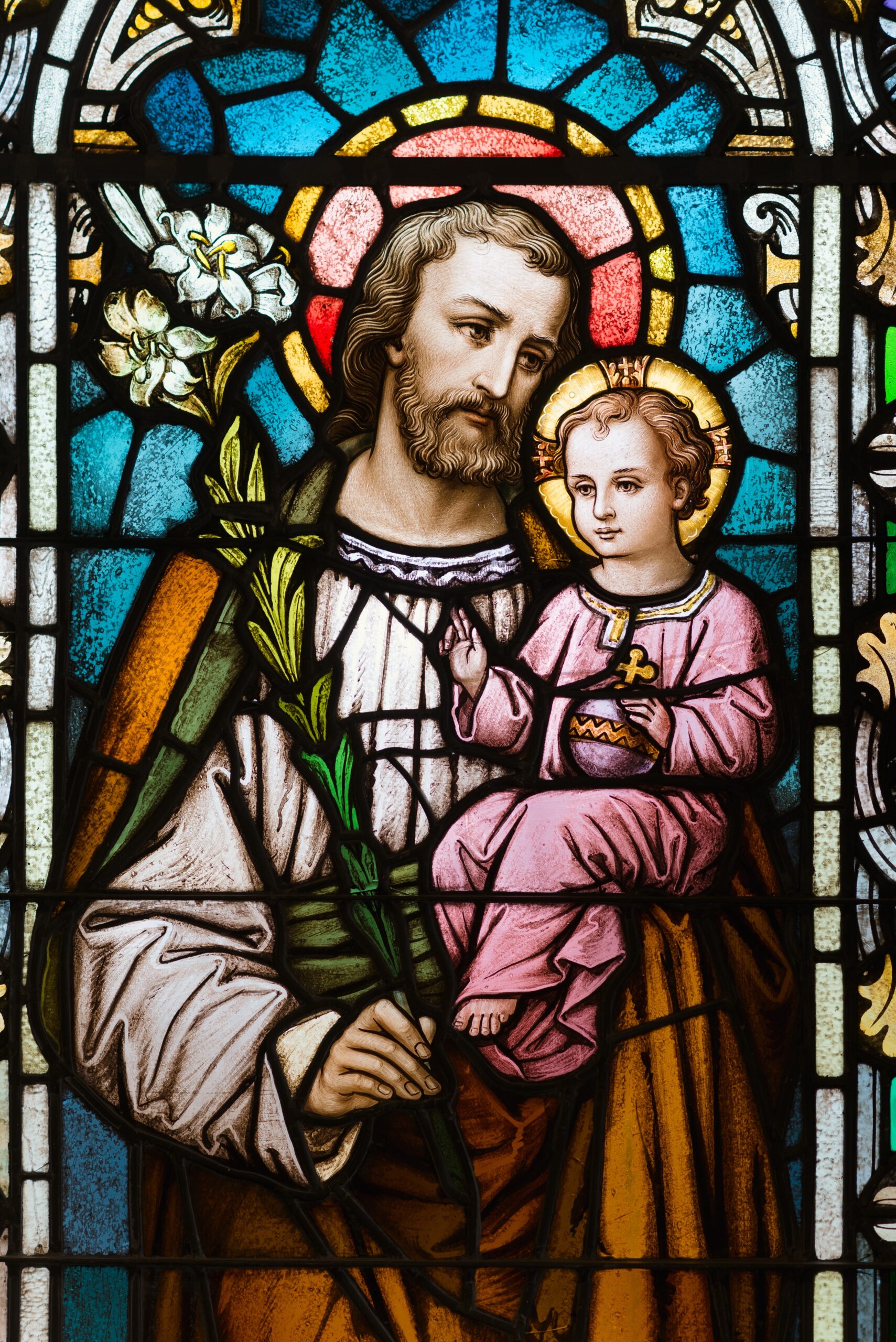
Is Christmas a Hoax? A mass dilusion of spiritual deception? An elaborate scheme of manipulation? A religious fable? If so, where does that leave Christians today?
In moments of reflection, many Christians have asked this question. I have. Because times of doubt are common in the Christian faith. And a favorite tool of our adversary.
Some people suggest that if the Christmas story isn’t true, the Christian lifestyle still presents a meaningful, moral framework for life. And therefore, worth following. But the Apostle Paul rejects that idea.
And if Christ has not been raised, then our preaching is in vain and your faith is in vain. If in Christ we have hope in this life only, we are of all people most to be pitied. (ESV, 1 Corinthians 15:14, 19)
In other words, if the birth of Jesus Christ two thousand years ago is simply a feel good story with a moral lesson, a Santa Claus inspired holiday celebration, and a menu of new Hallmark movies, Christians should be pitied. Because we follow a lie. A worthless faith. And the hope of eternal redemption is a grave illusion.
Therefore, I am all in on Jesus Christ and celebrating the meaning of his birth. And hold on to three reminders for Christmas hope.
Is Christmas a hoax? Christmas is faith in a historical event
“And without faith it is impossible to please him, for whoever would draw near to God must believe that he exists and that he rewards those who seek him.” (ESV, Hebrews 11:6)
The birth of Jesus Christ is a historical event. It was prophesied 700 years before it occurred and the historical facts surrounding it are undisputed. The Christian faith supplies the “why.”
It’s because humanity is relationally separated from God because of sin. And we cannot fix or save ourselves. So Jesus Christ, the Son of God, came to live a perfect life and die as a sacrifice for those sins. Those who believe in Jesus and confess him as savior and lord are forgiven of their sins and granted eternal life in heaven.
Still, it requires faith. Either you believe or don’t. Furthermore, Jesus shouldn’t be considered simply a good man or moral teacher. Because he claimed to be God. So if he wasn’t, he was something else. Since history factually records Jesus’ birth it can’t be dismissed as a fairy tale. But your response to those events involves faith.
Is Christmas a hoax? The Word of God is Absolute truth
All Scripture is breathed out by God and profitable for teaching, for reproof, for correction, and for training in righteousness, that the man of God may be complete, equipped for every good work. (ESV, 2 Timothy 3:16)
God’s Word is absolute truth. A solid foundation to build your life on. And a common point of reference for everyone. Otherwise it’s your truth versus my truth and how do we ever agree on anything? Because eventually our truths will collide and then what? The truth backed by the biggest gun wins?
Without absolute truth life is a potpourri of human opinion riding a cultural tide that pulls you into a choppy sea of confusion. With nothing to hold you fast.
The absolute truth of Scripture anchors my beliefs. And provides sure footing that informs my faith. Its message is consistent and reliable for purposeful living. And while I must still exercise faith, it is not blind but based on evidence. And offers an eternal future.
Is Christmas a hoax? A Community of Faithful Followers Offers Assurance
Now faith is the assurance of things hoped for, the conviction of things not seen. For by it the people of old received their commendation. By faith we understand that the universe was created by the word of God, so that what is seen was not made out of things that are visible. (ESV, Hebrews 11:1-3)
Rather than ask, “How can so many people be deceived?” I ask, “How can so many people be wrong?” And, “why would anyone suffer or die for a something that isn’t true?”
In addition, I gather weekly with a local body of fellow believers. Broken and imperfect. Yet, positive and uplifting. A community driven by love and seasoned with grace that gives and receives assurance. Furthermore, we are unified by worship. Bonded in the fellowship of God’s Spirit in mutual encouragement and support. In short, doing life together.
And Christmas brings it all together with joy and hope.
For unto you is born this day in the city of David a Savior, who is Christ the Lord. (ESV, Luke 2:11)
About Chip Tudor:
Chip Tudor is an author, blogger and professional writer. He publishes books, humorous Christian drama, and thought provoking blogs from a Christian worldview.This blog is originally published here.
The Christian faith in simple words
Christianity for the Average Joe explains the core beliefs of Christianity in clear, everyday language—without theological jargon or confusing religious talk. But in a friendly, conversational tone of voice.
A study of John 5:30-47 reveals Jesus’ judgment aligns with the father, witnesses that testify to Jesus, and self-glorification leads to rejection of Jesus.
A study of John 5:30-47 reveals Jesus’ judgment aligns with the father.
I can do nothing on my own. As I hear, I judge, and my judgment is just, because I seek not my own will but the will of him who sent me. (ESV, John 5:30)
These words are opposite of our human experience. And explain why parenting is so challenging. Our children frequently don’t listen to us just like we disobeyed our parents. But this does not happen between God the father and son. The son always hears and follows the will of the father. But again. This is not a heirachical relationship of father over the son. They are equal as God. Rather, it is a relationship of mutual love and complete agreement.
And why do we fail to listen and obey? Because of our sin. The very reason that Jesus came to earth. Not to condemn but to save us from it. Therefore, we are all accountable for our choice. And ultimately, the son will judge us for it. However, the son does not judge on his own. Because in his judgment, as with all things, he listens and responds to the voice of the father. He doesn’t seek to prove himself. Draw from his own wisdom. Or gain personal glory. But simply obey the father’s will.
A study of John 5:30-47 reveals the witnesses that testify to Jesus.
If I alone bear witness about myself, my testimony is not true. (ESV, John 5:31)
In Jewish law a person could not be convicted of a crime on the word of an accuser. Or even an accuser with one witness. There had to be at least two corroborating witnesses. So, Jesus points out witnesses that testify on his behalf. Not because he needs them, since he is God. But to verify his Messianic claim according to their own legal system.
Five Witnesses
John the Baptist: John was a respected prophet whose entire ministry previewed the coming of God’s annointed one. He clearly proclaimed the coming of one who was greater than him. In V.35, John is called a “shining lamp.” The Greek word for “lamp” is lychnos, which must be lit by someone else. Jesus, however, is the “light,” which is the Greek word phōs.
Works: The Greek word for “works” is ĕrgŏn, which means to work, labor, and toil as an effort or occupation. It encompasses Jesus’ miracles, teaching, and everything else related to his ministry. His works testify that Jesus was sent by the father. When Nicodemus visited Jesus, he acknowledged that his works proved that God was with him.
The father: Mark 1:11 records the baptism of Jesus and Mark 9:7 the transfiguration. And both occasions include the affirming and audible voice of God. Furthermore, John 1:32 records where the Spirit descends on Jesus like a dove. Although there’s no clear indication in this passage John is alluding to any of them. So, he may be speaking in general that all of the father’s revealing work points to Jesus.
The scriptures: Jesus pointed out the Jews diligently studied the scriptures that bore witness of him. But they still didn’t turn to him for life. And we see the same thing today. People read the Bible, but don’t believe. Why? Do they fail to see because their minds are closed? Or maybe they reject what doesn’t fit their worldview?
Moses: The Jews revered Moses who wrote the first five books of the Old Testament. And Jesus points out to them that Moses also wrote about him. So, if they don’t believe Moses about him, how will they believe what he says?
A study of John 5:30-47 reveals self-glorification leads to rejection of Jesus.
How can you believe, when you receive glory from one another and do not seek the glory that comes from the only God? (ESV, John 5:44)
Sin at its core is a self-centered heart. One that seeks its own glorification, recognition, and approval from other people. However, Jesus sought only the father’s approval. Obedience to his will. And his glory. As Christ-followers, we should have the same aspiration. But it’s an ongoing battle against our natural self-centeredness. Self-glorification. Disobedience to God. And desire for the approval of others.
It is only accomplished through the Holy Spirit’s work in our hearts. The desire for attention and recognition must be met by a humble and contrite spirit that seeks to elevate God, rather than ourselves. Desires to please God rather than others. And glorify him rather than ourselves.
About Chip Tudor:
Chip Tudor is an author, blogger and professional writer. He publishes books, humorous Christian drama, and thought provoking blogs from a Christian worldview.This blog is originally published here.
Looking for a small group Bible Study?
This four week study dives directly into God’s word. It includes an individual study with an exegetical approach that examines word meaning, provides background information, and thought provoking questions for reflection and journaling, And a weekly, group study guide that promotes lively group discussion around other scripture references, personal stories, and life experiences that apply scriptural truth to life.
A study of John 3:22-36 covers when ministries compete. Motives should be examined, humility expressed, and Jesus exalted.
A study of John 3:22-36 covers when ministries compete. Motives should be examined
And they came to John and said to him, “Rabbi, he who was with you across the Jordan, to whom you bore witness—look, he is baptizing, and all are going to him.” (ESV, John 3:26)
Jesus’ final command to his followers before ascending to heaven was to make disciples. It is our primary mission. And should unite us in a common cause. So, why is it rather than cooperating, we often compete? Both among and within churches.
Our church is better than your church. With ministries for everyone. Cooler worship. And relevant sermons that pack a spiritual punch. Seldom said out loud, of course. But hinted in subtle ways. Like mentioning our tremendous church growth. The near, professional level of our worship team. Multitude of baptisms. And so on.
We smile and say “praise” God at the glowing report of another church. But a twinge of jealousy pricks our hearts. And we secretly rejoice when they encounter hardship. We should examine our motives when these feelings arise. Because it is sin that drives apart rather than unifies in godly purpose. And we should confess them to God who cleanses us with his forgiveness.
However, it’s not new. Ministry jealousy appears front and center in this scripture passage. The crowds following Jesus were increasing as more people followed him rather than John the Baptist. And John’s disciples went to him about this unsettling shift in ministry popularity. Their concern pressing. Worry in their voices. Followers were flocking to Jesus instead of John. And while they didn’t come out and say it, you can sense it on the tip of their tongues. “Jesus is taking away all our followers. We have to do something!”
A study of John 3:22-36 covers when ministries compete. Humility should be expressed
You yourselves bear me witness, that I said, ‘I am not the Christ, but I have been sent before him. Therefore this joy of mine is now complete. He must increase, but I must decrease.” (ESV, John 3:28-30)
In my mid 20’s, I attended a church Bible Study composed of young, entry level professionals. It was taught by a businessman who had reached the pinnacle of professional success. A senior leadership position in the company. Big home in an exclusive neighborhood. Expensive cars. But during one class he shared he had also reached a point in his Christian faith where material possessions were no longer important to him. He could easily give all these things up and still be happy. As we all quietly digested this humble brag, a voice in the back asked, “Can I have them?”
Expressing humility
John the Baptist made a humble statement about himself in John 1:20. He was not the Christ, but sent before him. Furthermore, he says in 1:27. “He who comes after me, the strap of whose sandal I am not worthy to untie.” It was the kind of unpretentious claim you expect from a minister. Humble. Contrite. But never tested. Until now. Because now, John’s thriving ministry was actually fading into the background. And perhaps, to the surprise of his disciples, rather than devise a new ministry growth plan, John the Baptist affirmed that, “He must increase, but I must decrease.”
It was an expression of genuine humility. Which is not thinking less of yourself, but thinking about yourself less. John understood that his mission was to pave the way for Jesus. And it demonstrates another truth. God calls every Christ-follower to serve in a form of ministry. Some are high profile. Others behind the scenes. But all are equally important in the Kingdom of God. Furthermore, God does not measure your level of success but of your faithfulness. And to acknowledge in everything that all credit goes to God.
A study of John 3:22-36 covers when ministries compete. Jesus should be exalted
He who comes from above is above all. He bears witness to what he has seen and heard, yet no one receives his testimony.Whoever receives his testimony sets his seal to this, that God is true. (ESV, John 3:31-33)
The word “above” is repeated twice in the first sentence, but has different meanings. The Greek word for “from above” is anōthĕn, which means from above, the top, from the first, and from the beginning. It refers to the divine, eternal Son of God. The second “above all” is the Greek word ĕpanō, and means amount, place, and rank. In other words, John exalts Jesus as the almighty God who reigns supreme. It is the antidote to ministry competition,comparison, and jealousy. By exalting Jesus’ name in praise.
It places us in humble submission to our Savior and Lord. And encourages us to celebrate every spiritual victory without scoring who gets the gets the credit. By reminding us we all serve the Kingdom of God for the glory of God.
Sure. Positive affirmation and the words, “good job” are always appreciated. But the ultimate satisfaction awaits when Jesus says, “Well done, good and faithful servant.”
About Chip Tudor:
Chip Tudor is an author, blogger and professional writer. He publishes books, humorous Christian drama, and thought provoking blogs from a Christian worldview.This blog is originally published here.
Looking for a small group Bible Study?
This four week study dives directly into God’s word. It includes an individual study with an exegetical approach that examines word meaning, provides background information, and thought provoking questions for reflection and journaling, And a weekly, group study guide that promotes a lively group discussion around other scripture references, personal stories, and life experiences that help apply scriptural truth to life.
Faith going through the roof. When Jesus teaches a crowd of people in a home, four men bring him a paralyzed man on a mat. But they can’t get through the crowd. So they cut a hole in the roof and let the man down inside. Here are lessons from the story.
Faith going through the roof. Genuine faith is demonstrated.
But someone will say, “You have faith; I have deeds.” Show me your faith without deeds, and I will show you my faith by my deeds. (ESV, James 2:18)
James urges Christ-followers to demonstrate faith by actions. And the story in Mark 2:1-12 takes it to a higher level. Literally.
Jesus is in a home teaching a crowd of people. Four men carry a paralyzed man on a mat to him for healing. But a thick crowd extends to outside the house blocking their way. So they climb to the roof, dig a large hole in it, and lower the paralyzed man down inside the house.
How is this possible? Well, roofs in towns like this were often flat and used as extended living space for things like storage, drying clothes, and praying. Exterior stairs and ladders provided access. And roof construction consisted of wooden beams covered by layers of dried mud or mud-baked and clay tiles. So, this was an ambitious endeavor, but not an impossible one.
Faith going through the roof. It’s easier to say than do
When Jesus saw their faith, he said to the paralyzed man, “Son, your sins are forgiven.” (ESV, Mark 2:5)
I can imagine Jesus watching with the scene unfold with a smile. The men had a problem, Jesus was the solution, and they weren’t taking “no” for an answer. Or at least, not let something trivial like a thick crowd and tiled roof stop them. Jesus might have said, “Nice of you to drop in.” But the eyes of God see beyond the obvious and penetrate the human heart.
The man obviously had a physical problem. But he had a spiritual one too. And that’s the one Jesus addressed by declaring, “Son, your sins are forgiven.” Today, like then, we often appeal to God for physical healing. But God cares more about our spiritual condition.
And Jesus addressed it in a first century drop the mic moment. Because a group of Jewish teachers of the law were in the crowd to check Jesus out. Who was this man they heard spoke with authority and performed miracles? And they thought to themselves…
Why does this fellow talk like that? He’s blaspheming! Who can forgive sins but God alone?” (ESV, Mark 2:7)
But Jesus knew and answered their thoughts.
Which is easier: to say to this paralyzed man, ‘Your sins are forgiven,’ or to say, ‘Get up, take your mat and walk’? (ESV, Mark 2:9)
Jesus confirmed the man was paralyzed. And what he was about to do was no cheap parlor trick. But of course, talk is cheap. Can you back up your words with actions? Show there is real divine power behind your words? That’s what the religious leaders wanted to know. And people today want to know it too. Don’t just talk about the power of God. I want to know if his power can make any difference in my life. If so, show me.
Faith going through the roof. They were amazed and praised God.
I tell you, get up, take your mat and go home.” (ESV, Mark 2:9&11)
Jesus understood the paralyzed man’s spoken and unspoken needs. And he does with us too. The paralyzed man immediately got up, picked up the mat he arrived on, and carried it as he walked away. And the mic drop moment changed to jaw dropping. Did the people applaud? Say, oohs and aahs? Or hush in speechless awe?
We don’t know. But Jesus clearly backed up his words with a display of divine power. There was no other explanation.
And everyone was amazed and praised God. We don’t know if the religious leaders joined in the celebration, but they certainly didn’t object. Although that would change over the course of Jesus’ three year ministry.
Jesus didn’t heal to entertain. Razzle and dazzle people. And put on a show. But to glorify God. And prove he was the Son of God. Even then, despite the obvious miracle, people did not believe in him. Just like people today. What about you?
About Chip Tudor:
Chip Tudor is an author, blogger and professional writer. He publishes books, humorous Christian drama, and thought provoking blogs from a Christian worldview.This blog is originally published here.
Looking for a small group Bible Study?
This four week study dives directly into God’s word. It includes an individual study with an exegetical approach that examines word meaning, provides background information, and thought provoking questions for reflection and journaling, And a weekly, group study guide that promotes a lively group discussion around other scripture references, personal stories, and life experiences that help apply scriptural truth to life.
Life questions we ponder. A night sky full of countless stars makes us wonder. Is there a God? If so, why is the world so messed up? What is the meaning of life? Is there life after death? Questions without answers. Or are there?
Life questions we ponder. Is there a God?
For what can be known about God is plain to them, because God has shown it to them. For his invisible attributes, namely, his eternal power and divine nature, have been clearly perceived, ever since the creation of the world, in the things that have been made. (ESV, Romans 1:19-30)
Does God exist? Yes or no are the two options. Creationists say God spoke the universe into existence and the complexity and intricacies of it scream intelligent design. Darwinists claim it was a chance event followed by billions of years of evolution, Neither side has absolute proof. Therefore, we all decide based on faith.
But that’s okay for Christ-followers. Because Jesus both expects and encourages us to exercise faith.
I write these things to you who believe in the name of the Son of God, that you may know that you have eternal life. (ESV, 1 John 5:13)
Still, Christian faith is more than wishful thinking. Because it’s based on God’s word which includes hundreds of fulfilled prophecies. And it instills confidence the rest of scripture is also true along with the prophecies, yet to be fulfilled.
The Bible is God’s written word. And it reveals who He is, the problem with our world, the solution, and His plan for the future. The Bible is more than just God’s law. It is His guidebook for life.
Life questions we ponder. If God is in charge, why is the world so messed up?
For by him all things were created, in heaven and on earth, visible and invisible, whether thrones or dominions or rulers or authorities—all things were created through him and for him. And he is before all things, and in him all things hold together. (ESV, Colossians 1:16-17)
God holds it together
If the universe is simply a cosmic, accidental assembly, what stops it from coming apart? Like a rip in the fabric of time. A glitch in gravity? Puncture in the atmosphere?
Scripture says it’s because God actively holds together. We don’t control climate change. God does. Furthermore, there are invisible aspects to creation beyond our human perception. And everything–both visible and invisible–is under God’s dominion.
God is working out a plan
Making known to us the mystery of his will, according to his purpose, which he set forth in Christ as a plan for the fullness of time, to unite all things in him, things in heaven and things on earth. (Ephesians 1:9-10)
It is the sin of mankind that causes chaos. Billions of humans exercising selfish desires in a huge swell of sin that inflicts pain, conflict, disease, and disaster. But God offers a solution. And orchestrates an ultimate plan behind the scenes and beyond our understanding. In other words, God is sovereign and guiding us towards an eternal conclusion.
Life questions we ponder. What is the meaning of life?
The end of the matter; all has been heard. Fear God and keep his commandments, for this is the whole duty of man.For God will bring every deed into judgment, with every secret thing, whether good or evil. (ESV, Ecclesiastes 12:13-14)
King Solomon was the wisest person who ever live. And he searched for ultimate meaning by pursuing every pleasure and pursuit life on earth offered. What he described as life “under the sun.”
And his simple conclusion? A life without God is a vain effort and without meaning. Because God is the source of meaning and without Him you have nothing. Therefore, follow God’s commands and live a life pleasing to Him. For that will guide you into your next life.
Life questions we ponder. What happens when you die?
I am the way, the truth, and the life. No one comes to the father except by me.
Jesus spoke often about eternal life with two destinations: heaven and hell. Heaven is the preferred destination. However, contrary to a popular belief, you don’t earn your way by good behavior. But through faith in Jesus Christ who died as a sacrifice for our sins.
Because we all are sinners and sin disqualifies us from gaining entrance to heaven. However, Jesus died as a perfect sacrifice for our sins. Therefore, we enter heaven by confessing our sins to him and asking for his forgiveness.
So when you die, the question is not did your good deeds outweigh the bad ones. But did you express faith in and follow Jesus?
About Chip Tudor:
Chip Tudor is an author, blogger and professional writer. He publishes books, humorous Christian drama, and thought provoking blogs from a Christian worldview.This blog is originally published here.
Looking for a Bible Study for yourself or small group??
Join my list and I'll notify you of new blog posts and send you a monthly newsletter. It features inspirational thoughts, writing tips, and a peek into writing projects. I'll also include my article: Exaggerate to Make Your Presentations Funny. It shows you how to punch up presentations with humor and make them more compelling.